Your Questions
Your Questions
Q: Dr. Eppley, I did lots of research before my jaw angle implant surgery. But I guess not enough to find the difference between lateral jaw implants to vertical implant. I have a high jaw, and I didn’t want it much wider. Just further down with slight wider. I told my surgeon this and he said that there’s only one implant for the jaw. The lateral one. I now can see the width that I will have but of course there’s swelling. The width is too much and it’s not down where I was wanting my jaw to be. So that’s why I would like to do the vertical lengthening jaw implant. I’m trying to see if my doctor can remove it this week. My doctor did not place screws with my implant, he just placed the silicone implant in the pocket of my jaw. I don’t think my doctor was an expert on jawline enhancement and I think that was my first mistake. I’m actually freaking out thinking I just ruined my face. Is it possible to fix my jaw implant problems? Not only did he do the wrong implant, he also went too large. Please comfort me with info and what I can do.
A: Unfortunately your research on jaw angle implants was indeed inadequate. Of the three decisions you have to make about jaw angle implants, the very first one is whether the implants should be of the lateral width style or the vertical lengthening style. The second decision is what sizes or thicknesses should theses styles be. Lastly, there is the issue of material choice. (silicone vs Medpor)
By far the most common jaw angle implant is the vertical lengthening style with some width. (but usually less than that of the vertical length increase) Pure width (lateral width) jaw angle implants are used in 10% or less of all jaw angle implants in my experience.
You did not ruin your face, the implants can always be converted to the vertical lengthening style at any time. With your facial shape, you likely need a 7mm vertical lengthening and 3mm width style jaw angle implant.
Dr. Barry Eppley
Indianapolis, Indiana
Q: Dr. Eppley, I am specifically looking for angle of the mandible implants (jaw angle implants) to increase the width of my jaw as well as increasing the vertical height to give it a more angled, defined look to my otherwise high, weak jawline. I am wanting to have a simultaneous chin implant to compliment the jaw implants.
While I can find endless information on chin implants, jaw angle implants seem rather non-existent and very few plastic surgeons perform them which has me a little apprehensive as to why this is. Would you be able to tell me more about this wrap around style implant and the advantages/disadvantages of having this over a simultaneous angle of the mandible/chin implant?
A: The history of chin and jaw angle implants are quite different even though they are located on the same bone. Chin implants are ‘end of the bone’ augmentations that are easy to predict the outcome, simple to place and have minimal morbidity and recovery because the overlying muscle and soft tissue cover and disruption is small. The first chin implant was developed in the 1960s and was and continues to be the most recognized and important bony facial profile enhancement technique. Chin implants have gone through many different designs and shape changes over the years to meet the differing needs of many different types of aesthetic chin problems.
Jaw angle implants, conversely, are very much the opposite of chin implants. They are ‘middle of the bone’ augmentations whose aesthetic reqiurements are harder to predict, require more skill and experience to place, and have more morbidity and recovery because the largest muscle on the face (masseter muscle) is being disrupted.The first jaw angle implant was introduced in 1995 without any design changes since then…with an original design (width only) that is inadequate for most patient’s jaw angle deficiencies. (vertically short)
With an increasing public demand for more complete jawline enhancement, there is a need for neeawareness offew surgeons however have ever performed them or had any training to do so. My experience with jaw angle implants and overall jawline enhancement in general is considerable as I have focused on changing how jaw angle implant surgery is done through new implant designs and the surgical techniques in placing them.
The fundamental difference between using a preformed 3-piece or a custom one-piece jawline enhancement is the connection between the chin and the jaw angle augmented areas. If one wants a perfectly straight line between the chin and jaw angle, then a custom jawline implant is the approach of choice. Custom implants are also needed when the dimensions of the jawline changes are desired exceeds the size or shape of what is available ‘off-the-shelf’.
Dr. Barry Eppley
Indianapolis, Indiana
Q: Dr. Eppley, I exhibit a weak jawline and recessed chin. I have had several consultations with doctors in the Los Angeles area. The most logically sounding consultation seemed to be a custom jaw implant. I see that you do this procedure yet also use off the shelf products as well. My question is…is a custom implant truly superior and does the higher cost justify this type of implant? The doctor made a compelling argument for custom implants however the price was extremely high. Look forward to your reply.
A: The key decision between off the shelf and custom jawline implants is in what you are trying to achieve. Depending upon the nature and magnitude of the dimensions of the jawline changes desired, only a custom implant will work for some patients. In fact, in some of these patients they should not have the procedure at all unless they go a custom fabrication route, For others, a custom implant may have no significant aesthetic advantage and off the shelf implants will work just fine. You would have to supply me with the exact jawline changes you are seeking and some pictures to better answer your question about what will work for you.
When it comes to cost, it is important to realize that custom facial implants today are not significantly more expensive than preformed off the shelf implants. Why? While the material cost of the custom implant is higher than the material cost of preformed implants, they are capable of being surgically placed ini half the operative time. Thus the extra cost to design and fabricate a custom jawline implant is partially offset by the savings of a quicker operation. You also have to consider the risk of revisional surgery, where if it were necessary due to an aesthetic issue, any savings from using off the shelf implants would be completely wiped and exceeded.
Dr. Barry Eppley
Indianapolis, Indiana
Q: Dr. Eppley, I had jaw angle surgery and it was over-resected. I want to reconstruct my jaw angle (vertical height) and widen my front chin . I have a before and after x-rays of my mandible and I want to have it reconstructed as before. Also I want to get rid of my titanium screws. I enjoy boxing and i am really worried about this reconstructing surgery.
1) Can silicone be broken or bent or destroyed by punches?
2) Can silicone be moved or migrated by punches? Even if I get a 3D customized fit and screws attached? ( I’ve heard that it happens quite often)
You told me before that silicone would never move no matter how hard it is traumatized and I can enjoy every sport. However I’ve seen many cases of silicone implants moving. If your word is true please explain me how does that work.
A: While I don’t know where you are getting your information about jaw angle implants, I can only tell you what I know based on my experience answering questions and treating patients from all over the world in the past two decades with this type of facial implant surgery. I have yet to have an actual patient or an inquiry where someone has had jaw angle implant displacement from trauma. Perhaps this has happened to someone in the world, but I have yet to ever hear about it or treat anyone for it.
The apparent negligible incidence of silicone jaw angle implant displacement can be explained by an understanding of its biomaterial composition and the biology of encapsulation around it. The solid silicone elastomer of facial implants can not be fractured or broken, regardless of the imposing force, because it is not a brittle material. You can take a hammer to a facial implant and you simply cannot break into pieces. The bonds between the silicone molecules are flexible nor rigid. Thus when I say putting a silicone implant against a facial bone acts like a bumper, that is because of what it actually does and behaves like.
The long-term stability of any facial implant is ultimately determined by the body creating a layer of scar around it, a process known as encapsulation. This capsule (layer of scar) is what holds the implant in place and preventing future migration or displacement. The purpose of screw fixation of facial implants is to hold the smooth surfaced material securely in place until this enveloping scar tissue forms. For most patients, the screws beyond this point (6 weeks or so after surgery) have little value. But in the patient who may be exposed to some periodic facial trauma (e.g., boxing), the screws add extra insurance against any potential risk of implant displacement
Dr. Barry Eppley
Indianapolis, Indiana
Q: Dr. Eppley, I have a minor case of asymmetry to my jawline .the right side of my mandible is angled higher and shorter in length to my left side. My right side is also weaker than my left side . if there is one thing I am pleased with about my right side it would be the shape. I like the shape of my right side better than the left. My question is is there any way my right side can be made the same length and just as prompt as my left side? And can my left side be made to shape my right side?
A: There is only one way to do what you want to do with precision for improving your jaw angle asymmetry….and I would submit that without this precision for your ‘minor case of jawline asymmetry’ it should not be done. Computer designing of the right jaw angle implant could be done using left side as the model from a 3D CT scan. Only a computer design process can match up the jaw angle sides. In short, you need a custom right jaw angle implant.
Dr. Barry Eppley
Indianapolis, Indiana
Q: Dr. Eppley, I had jaw resection surgery.But it was overresected. So I am thinking of my jawline reconstruction. In theory would it be possible to have a strong and tough jaw by having my mandible reconstructed with 3D printed customized titanium alloy additive? Usually I heard that silicone or PMMA is often used to make a jaw line but they are not as strong as titanium and don’t have osteointegration properties. I love sports like boxing and I want to know if I can enjoy the sport with my reconstructed titanium mandible.
A: You can have your jaw angles reconstructed by using a 3D method to fabricate titanium implants rather than silicone. However the cost to do so may be prohibitive as the costs of the implants alone will come close to $10,000 and that does not include the surgical fees to place them. While this can be done, I don’t see the advantage of a metal reconstruction over the option of custom silicone jaw angle implants. They offer similar protection, would be easier to place, cost far less to manufacture, provide protection to the bone by acting as a ‘bumper’ and can be securely fixed to the bone so that they would have no problem withstanding any sports activity.
Dr. Barry Eppley
Indianapolis, Indiana
Q: Dr. Eppley, In 2010 I had vertical Medpor jaw angle implants implanted. I am not so pleased with the result so therefore I would like to remove them. Is this possible?
Also, I would like to replace them with lateral width jaw angle implants, this is what I wanted in the first place but there was a miscommunication between myself and my previous doctor. If possible, and I know that it differs from case to case, what is the average approx. cost for this procedure? I would be flying in from Eurpoe so I would like to do the consultation and surgery in one trip. I can send pics to help before the consultation. Thanks.
 A: I have had the experience of removing numerous Medpor jaw angle implants and replacing them with silicone-based jaw angle implants of various dimensions. Medpor implants can certainly be removed successfully although it is somewhat tedious as the tissues can be very adherent to them. It often can be just as traumatic to the tissues as their initial placement…and sometimes more so. But it can be done without any damage to the bone. Once the implants are out, there is plenty of room (pocket space) for the new silicone lateral width implants. But because silicone is a smooth material and the tissue pocket will be much bigger than the implants, it would he critical to secure the new jaw angle implants in with screw fixation.
Dr. Barry Eppley
Indianapolis, Indiana
Q: Dr. Eppley, I have been opening your website and reading your articles for a while. I think your website is very informative. I would like to thank you for creating this website. Without any doubt i can say your are one of the world’s best and most skilled plastic surgeons. I wish I was very wealthy, I would have flown to USA and set an appointment with you, but unfortunately I don’t have a strong budget at the moment. I intend to travel locally for a chin osteotomy or implant and jaw angle implant. I want to make my face look very masculine and angular. I am attaching my photo to have your viewpoint about the type of jaw angle implant. I want to do something permanent and long lasting. I think my jaw needs a thick implant but I don’t know which shape and type is better. Thanks in advance.
A: While most commercially available silicone jaw angle implants provide only width, the vast majority of men who seek a stronger and more defined jawline need vertical lengthening of the jaw angles as well. Thus a more masculine jawline usually needs a combined vertical and width dimensional change to have a more pronounced flare to their jaw angles. Your pictures certainly show that to be true. The only question is how much vertical and horizontal thickness in millimeters would look best.
Dr. Barry Eppley
Indianapolis, Indiana
Q: Dr. Eppley, I am interested in facial reshaping surgery. I am a female with a recessive lower chin and a minimal jawline. I have had orthognathic surgery twice now, which has improved my teeth but not the balance of my face. I still have a very convex facial profile with an extremely long vertical jaw angle. Here are some images of my face. I hope these will help you to assess my situation. My last surgery was 11 months ago in which my upper and lower jaw were brought forward to correct an overbite and an open bite. I do feel that my upper jaw (between nose and upper lip) is more elongated than before. As you will see from the photos it is difficult for me to close my lips. I realize that this cannot probably be fixed, however I would like my face to look less long and narrow and my jaw line more defined. My jaw is rather vertical in angle. Any advice very much appreciated.
A: The forward positioning of the maxillomandibular complex has placed a strain on your lip closure as this was not the bony relationship that your lips were ‘designed’ to function over. Along with the upper lip lengthening, these are not rare changes that occur with such maxillomandbular forward movements. In addition, loss of the jaw angle can occur with sagittal split ramus osteotomies (SSRO) of the mandible particularly when the lower jaw moves forward. This can be accentuated in females who may already have a thin and slightly high vertical has angle position initially.
The way to make your face look less vertically long and not so narrow is through a combined sliding genioplasty and jaw angle implants. Small vertically lengthening jaw angle implants (7mm vertical length and 3 to 5mms width) will create more defined jaw angles but not over power the upper face. A sliding genioplasty of the movements of 3mms forward and 6mms vertical reduction would shorten the chin length and also help push up the soft tissue chin pad. This may provide some potential benefit also to reducing the lip strain through a better lower lip position at rest.
Dr. Barry Eppley
Indianapolis, Indiana
Q: Dr. Eppley, I am a 25 year old male. I’ve had a septorhinoplasty, a chin implant and orthodontic treatment previously. I feel that my previously under projected chin and jaw development are inter-related, however, given that I am fairly satisfied with my corrected bite and improved chin projection, I am interested in augmenting the jaw further (jaw angle implants perhaps) to achieve a more masculine look. There is a bit of asymmetry and the angle of the back of the jaw is more of a 45 degree as opposed to the more masculine 90 degree like angle. It seems that at this point, a sliding genioplasty may not be appropriate without removing the chin implant. I have considered fillers as a temporary ‘trial’ in the short term as a plastic surgeon locally is willing to provide Voluma for free to see if it fits his practice. Any thoughts or observations or anything else that may be beneficial given my facial structure is greatly appreciated.
A: Based on the current position of your chin and the rest of your facial structure, I would have reservations about any type of jaw angle implant augmentation. While you may not like your jaw angle shape now, any change in it would likely make it out of proportion to your chin, particularly if they were changed to a stronger 90 degree shape. That point could be proven, right or wrong, by having some computer imaging done to see how it looks to you. I think that of you do not add some further chin projection (vertical and horizontal) then the back of the jaw will look too ‘heavy’. I don’t think the chin needs to be moved much, maybe 5mm forward and 3mm down, but your chin is too short now to support much jaw angle augmentation.
It is not true that you need to remove a chin implant to do a sliding genioplasty. The osteotomy cut is done right across the top of the implant and the implant is moved forward with the bone as it comes forward and/or down. I have done that exact sliding genioplasty technique numerous times.
You certainly have nothing to lose by having injectable fillers done for jaw angle augmentation. But be aware that they do not produce the exact same effect as to what an implant does at the bone level. So it is not exactly a 1:1 comparative effect. There is probably as much to learn from computer imaging as there is from the filler treatment.
Dr. Barry Eppley
Indianapolis, Indiana
Q: Dr. Eppley, I need your assistance with helping my doctor “get it right” when it comes to my jaw implants. Last year I had jaw angle implants placed which were lateral ones and they were the largest ones by Implantech. I then developed an infection on the right side and then I got one side taken out and then I was booked into have it reinserted two weeks later. However I found that although I loved the size of the implants it was the swelling that I enjoyed. So I asked my doctor when he put back the implant that I would like bigger implants. However he told me there were no larger sizes so what he did was simply place silicone block between the jaw bone and the current implant to push the jaw out more. Months passed and then I had another operation because what happened was that the silicone block was pushing out the contours on my cheeks and simply producing a very fat, large, round looking face. So the next operation involved cutting a portion of the implant between the jaw and cheekbone (near the ear) so that my face would ” dip in a bit”. I let that heal and now I’m still not happy with my jaw. Although it is okay I find that I never have reclaimed that lovely square contoured look I wanted when it was swollen from the first time I had it done.
So what my doctor has decided is to place Medpor instead of silicone during my next operation. He says that Medpor looks and feels more like bone and will produce a more better shape especially since i have thick soft tissues. He showed me the catalogue and i think the biggest one was 11mm. However I’m not sure if this time round it will work. I think my current implant combined with the silicone block is a lot bigger in width compared to the Medpor. Is Medpor better in my case? Will it give me more of a chiseled look? I’m concerned that my doctor isn’t looking into vertical augmentation as well.
A: When standard sized jaw angle implants are not sufficient because of their size or shape, trying to modify them or adding to them is usually not a satisfactory solution unless the changes needed are relatively minor. This is where the role of custom jaw angle or jawline implants have a very valuable role. Made from a patient’s 3D CT scan, implant dimensions can be made that best suits the patient rather than standard sizes that are made for ‘average’ amounts of facial augmentation.
Medpor does not look or feel more like bone than silicone. That is a completely false statement. More relevantly, any implant dimensions offered by Medpor are not really much different then silicone particularly in width.
Once you have been through two jaw angle implant surgeries with still unhappy results, you have to choose a different approach. Without taking a custom implant design approach, you would be best to leave what you have alone as continuing to use standard jaw angle implant sizes and shapes will still ‘not get it right’.
Dr. Barry Eppley
Indianapolis, Indiana
Q: Dr. Eppley, I am interested in getting chin and jaw angle implants.I want to be an actor, and I have always been considered attractive however I feel that I need to have a wider jawline like Brad Pitt or Stephen Amell as well as a chin implant in order to balance out a bit of a weak chin and achieve the male model look. I was wondering, is this something that can be achieved for me and be considered extremely physically attractive? Also, when it comes to recovery, what can I expect? Will I be able to have the same smile and live my life the same way after everything is healed? Is it possible to participate in sports or boxing after a procedure such as this? Have many actors and male models had procedures such as these done to help them get to where they are today?
A: First and foremost, the most important thing to realize is what jawline augmentation (chin implant and jaw angle implants) can physically do for you. You can never look like someone else and you can never have their jawline or other facial features. All you can do is make the most of what you have. I have done some imaging of chin and jaw angle implant augmentation to help you see what that potential change would be on you. Expect three weeks of complete physical recovery and three months to finally see the healed and settled look as well as enough time to psychologically adapt to the facial changes. Chin and jaw angle implants will not affect your smile, facial movement or any other physical activity once fully healed. There is no problem participating in sports afterwards. Whether this type of surgery will make you more attractive or successful in whatever endeavors you do in life is more of an internal issue rather than what is seen exclusively on the outside.
Dr. Barry Eppley
Indianapolis, Indiana
Q: Dr. Eppley, I feel my chin is strong and I like my cheekbones, but they are wider than my jaw rami. I would simply like to add width to the lower third of my face by jaw angle implants. How can that be done? I have attached some pictures of my face so you can see what I mean.
A: I can see by your pictures as to exactly what you mean by narrow jaw angles compared to the rest of your face. Since I do not know what your jawline looks like from the side, I can not tell if it is just a width issue or a combination of width and some vertical lengthening. That distinction is critical in choosing the right style/design of jaw angle implants. Your have stated that you only need width so I will assume for now that is the only jaw angle dimension increase that you need.
Dr. Barry Eppley
Indianapolis, Indiana
Q: Dr. Eppley, I am interested in jaw angle implants. I’v attached some photos of my face. As you can see my jawline narrows inward as it comes down from my cheekbones. With that being said, I do not want the big, thick, extra wide looking jawline. I would like slight width and definition. I would ideally want more of a masculine, defined, bony look with hollowness between the corner of my lips to my cheekbones, kind of like a male model. I don’t want a big change, I would rather have a more inconspicuous outcome. I do understand; however, that there will be a difference in my look. From what I have seen online, the normal outcome is a thicker/ widened look. I don’t necessarily want that. I have attached images of Tom Cruise and a photo of Johnny Depp to show you examples of my desired outcome.
A: Jaw angle implants can produce a variety of jawline changes based on the style and size of the implant but the facial shape and tissue composition also has a major influence on the outcome. While many men do not have the facial shape to come close to those jawline goals, you actually do because you do not have a lot of subcutaneous fat. You have to have a pretty thin face to pull that off. So while I think you can achieve it, it is not going to be able to be done with any of the standard shaped jaw angle implants. You need a special shaped jaw angle implant that just sits on the back half of the jaw angle and has a significant lateral flare to it that is concave as it flares out. This way it gives no thickness to the jawline and only adds the angle accent. That could be done by either a semi-custom or custom implant approach. A semi-custom approach is where standard jaw angle implants are hard carved before surgery to create the desired shape. A custom approach is where the jaw angle implants are computer-designed off of the patient’s 3D CT scan.
Dr. Barry Eppley
Indianapolis, Indiana
Q: Dr. Eppley, I would like to know if the following facial surgery results are possible.
1) With a custom cheek/orbital implant can I augment all of the inferior, lateral, and superior orbital rims along with a small portion of the malar bone?
2) Can off-the-shelf jaw angle implants guarantee that my jaw angles will look more squared/pointed rather than U shaped and heavy?
3) With a rhinoplasty do you believe you can achieve an aesthetically pleasing nose job that keeps a lot of masculinity to my nose. (i.e., keeping a majority of the nasal bone projection and width while still projecting the tip out a slight bit and straightening the nasal bone and cartilage from a frontal view?
A: In answer to your questions:
- While any design can be made for custom cheek and orbital implants, there are limitations to the surgical access to place them. Through a lower eyelid incision, a custom implant can be placed to cover the inferior and lower lateral orbital rim and cheek, but not the upper lateral orbital rim or superior orbital rim. (those require a coronal scalp incision for placement)
- A preformed off-the-shelf jaw angle implant that I commonly use has a more flared and square jaw angle point to it that does not usually cause a rounded jaw angle look. (that patient undoubtably has the traditional rounded style of silicone jaw angle implant that is what is available to most surgeons)
- I believe your thinoplasty goals are achieveable as you have defined them and as we have looked at them with computer imaging in the past.
With that being said, let me make some general statements based on a lot of experience with male facial structural surgery. (of which all your procedures would qualify) It is important to understand that there are no guarantees in surgery. No surgeon can guarantee that any specific outcome will be obtained no matter how much thought goes into it beforehand. Aesthetic surgery involves risk of which the biggest one is less than the desired result. I mention this as you have used the term ‘guaranteed’, this is not an assurance I can give you. In the same vein, it is important to also understand that male facial restructuring is associated with a notoriously high rate of revisional surgery, probably approximating 25% to 33%. This is of paramount note in the young male patient who often is very difficult to please in their search for an optimal result. A good rule of thumb is that the patient will put twice the amount of time assessing their result after surgery than what they spent beforehand…hence leading to such high revisional rates. Slight asymmetries and imperfections are very poorly tolerated in the young male patient.
I mention these issues as you need to factor these considerations also into whether the facial surgeries we have discussed are for you, your expectations and your level of risk tolerance.
Dr. Barry Eppley
Indianapolis, Indiana
Q: Dr. Eppley, I want t know how to improve my disappearing jawline. Beginning about five years ago, the lack of definition in my jawline started to become progressively worse. Attached you will find some pictures that show a couple of different views that are fairly current as well as one from about 5 years ago to show how the lack of definition is getting progressively more noticeable as I age although I have never had that squared jaw that I like. I am in my late 40s now. While I know I will need to address the skin sagging on my lower face, jowls developing and neck laxity at some point, I am not ready for the scars associated with a face/neck lift. My hope was that by giving my back jaw more definition with angular implants, it would pull some of the loose skin simply by the sheer nature of adding some bulk but more importantly give me some definition so that it doesn’t look like my face just blends into my neck.
A: I believe you are correct on both counts. First, you are definitely not physically (or mentally) ready for any form of a jowl/necklift. That would definitely be too premature at this point in your early aging process. That day will arrive but you are at least 5 to 7 years from the benefits of that facial rejuvenation surgery. Secondly jaw angle implants, particularly vertical lengthening ones, will pick up some of the loose skin in the back end of the jaw and create more of a break between the jawline and the neck and give you more of that squared jaw look that you like.
Dr. Barry Eppley
Indianapolis, Indiana
Q: Dr. Eppley, I had plastic surgery done nearly 4 years ago that has left me what I consider deformed. I don’t resemble myself and there were so many mistakes the doctor made to my face. I am deeply saddened and depressed over this not only because of the cost but that I’m left disfigured and violated. I had my nose done where the doctor inserted a silicone implant promising that he would be able to correct my slight deviation with it. That was not achieved and my nose appears even more deviated, my nose looks short, and my nostrils more visible. I have thin skin so I feel you can almost make out the implant when looking at me. I would very much like to correct the mentioned issues. Also he performed an extraoral jaw reduction on me that left me further disfigured. He overcorrected and now my face has the appearance of a horse. I would like to restore the lost volume and give my face back it’s natural contour. Not to mention the incisional scar is very unsightly. It’s almost two inches long and is hypertrophic and red. I would like to revise the scar to make it less noticeable. I also had a silicone chin implant placed but it does not fit my face. It’s too big and wide and I would just like it removed and possibly have fat grafting to that area instead. I would possibly like other areas to be fat grafted as well such as my nasolabial fold and the hollows of my eyes.
A: From a nose standpoint, if you had an initial nasal deviation overlaying silicone implant on a nose that is deviated will actually make the nasal deviation look worse not better. So your outcome is not a surprise since you have to lay the implant on the existing nasal base. With thin skin and implant encapsulation, implant visibility often appears years later. From a short nose and nostril visibility standpoint, I am not sure how an implant would have caused that per se with the exception of a high bridge and dorsal line may make the amount of tip projection/rotation perceptibly look shorter and more rotated. From a secondary rhinoplasty correction standpoint, it appears that the implant would need to be removed and cartilage grafting done to augment and lengthen the nose with tip derogation as well as correction of the underlying nasal deviation which almost certainly has a septal deviation as a core root of the problem. The question is where the cartilage needs to be harvested from and that would depend on how much is needed. The debate is always whether it would be a combined septal/ear donor site or whether more is needed which requires rib cartilage. I would need to see some side view pictures to have a better idea in that regard.
From your prior jaw reduction procedure, I am assuming that the incisions and now red scars are at the back of the jaw behind the angles. (a side view picture would show that better) When you say you have lost volume and has changed you facial appearance (I don’t know if I would go so far as calling it horse-like), that likely implies that it looks too long because of the lost jaw angle volume and a steeper mandibular plane angle. (high in back and steeply slopes downward towards the chin) Restoring lost volume from prior jaw reduction in my experience is done by adding a jawline implant closer to the lost angle area to add some vertical length and a little bit of width.
Revisions of the jaw angle reduction scars can certainly be done and would likely result in a better outcome since they would not have the original traction. (pulling and stretching the skin to cut the bone) The interesting question about your scars is whether that access should be used for the placement of the implants since you have them already. That would make your recovery much easier than from gong inside the mouth. Whether the implants can be used forms standard stock sizes or should be custom made from a 3D CT scan is another issue to debate.
One of the may problems with chin implants done in women is that they are are often too wide as extended anatomic styles are often used. The question here is whether it should be replaced with a smaller central button style chin implant (which is far more appropriate for female faces) or replace with a fat graft with its unknown survival rate.
Lastly, fat grafting can be done for the nasolabial folds and eye hollows with the only real issue bend their survival is the risk of some unevenness or lumpiness in the eye hollow area due to the thin skin. This can usually be minimized by using a micronized fat grafting technique where the fat particles are made very small before injecting.
I hope these comments are helpful and if you can send some side view pictures that would be useful for further analysis.
Dr. Barry Eppley
Indianapolis, Indiana
Q: Dr. Eppley, I had a question concerning the jaw implant implants. I read a recent article which talked about disruption of the masseter muscle following jaw implant surgery due to disruption of the pterygomasseteric sling. The article talked about how the muscle could retract up and cause problems. Is this a complication you have seen often? Or is there some technique you have for preventing this?
A: In placing jaw angle implants, it is a submuscular/subperiosteal implant location over the ramus (jaw angle) of the mandible. These tissues must be lifted up to insert the implants. The masseter muscle wraps around the mandible and creates the pterygomasseteric sling. (muscle on both sides of the mandible) Thus when lifting up the muscle along the bottom edge of the bone it is possible to disrupt/tear this sling where it is the thinnest/weakest. If the muscle is completely torn along its entire length when it is being raised. If this happens it is possible that the masseter muscle will retract and could be seen as a bulge above the lower border of the implant.
While I have seen this potential issue discussed/written about, it is not a phenomenon in jaw angle implants or fracture repair or sagittal ramus osteototmies that I have ever seen. (all jaw operations that separate the pterygomaseeteric sling from the bone) The key in elevating this tissue is to do it gently and with attention to not tearing the muscle.
Dr. Barry Eppley
Indianapolis, Indiana
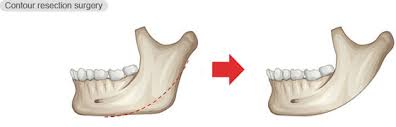 Q: Dr. Eppley, I am interested in jaw angle implants but for an unusual reason compared to most people who have jaw angle implant surgery. I naturally had well defined and square jaw angle which are not considered aesthetically desirable in Asians. I had jaw angle reduction surgery which I came to now realize is the old style amputation of the jaw angle bone. This has resulted in the soft tissue which has fallen and moved forward and therefore the frontal view of my face is now heavier than before. A CT scan also showed that the angles are not even and or the same on both sides. In addition, the angle is a lot steeper than before. Overall, the face is considerably narrower than before as the bone has been cut off. However, the face does not look better as I have a jowl (premature aging) due to this soft tissue which has fallen. Now, I am thinking that I would like some of that angle back as my new jaw has no definition. My questions about this potential surgery are:
1. I’d like to have a bit of an angle back to give the face definition. However, I don’t want the face wider. (I have a short face, and fear jaw implants will make my face rounder.) What would you do to obtain this?
2. What is the risk of any complications such as infection?
3. What material is the custom jaw implant be made of? I heard some say it’s made of acrylic PMMA? Is this safe? What material is the safest?
4. How many years can I keep this jaw implant?
5. Is it possible that I send you a CT scan in order for you to make a custom jaw angle implant? How long will it take for you to make this custom implant?
In addition, I have kept the jaw bones which were cut off.
A: In answer to your ‘reconstructive’ jaw angle implants questions:
1) The jaw angles can be replaced by implants that restore the angular shape (in the dimensions of height and length) but that adds no width at all and stays in line with your current jaw width.
2) While infection is always a risk with any implant in the body, I have only ever seen one and that was with a porous implant material. Infection in jaw angle implants, like most facial implants, is very uncommon.
3) I prefer silicone material for all facial implants when possible. This is because it is easy to insert (and remove if necessary), has the lowest risk of infection of any implant material, and is the least expensive to manufacture particularly when it comes to custom made implants. (PMMA implants can also be custom made using a skull model made from your CT scan and hand fashioned)
4) These implants should be permanent, will never break down or need to be replaced. (provided the desired aesthetic objective is achieved)
5) I would need to see the CT scan to see if it is adequate for custom implant manufacture. It would need to be a 3D CT scan done in high resolution.
The other very unique possibility since you still have the cut off pieces of jaw angles is to use them to manufacture the implants by designing directly off of them. I have never done that before but then no one has ever still had the their removed bone specimens.
Dr. Barry Eppley
Indianapolis, Indiana
Q: Dr. Eppley, I have been looking into getting facial implants, specifically chin, cheek and jaw angle implants, now for quite some time. During my time researching these procedures I have come across many reputable sources of information, like yourself, and millions of internet experts professing to know the ‘truth’ of some sort of another regarding facial implants. Nowhere amongst all this are clear and unambiguous answers to some of the most basic questions. Hopefully you can provide these for me. My questions are as follows:
1. If a chin, cheek or jaw angle implant is placed, the surgical wound heals, all is well and the patient loves the result several months after the operation, what is the likelihood that the implant will become infected years or decades later.
2. In your experience, if an implant is placed uneventfully can the patient then go on to live for decades having ‘forgotten’ about the implant, so to speak? I don’t want to have to come back to any implants later in life, I want to have my first cosmetic surgery and then forget about it forever.
3. Is the removal of an integrated Medpor jaw angle implant as difficult as it is said to be? Also, is there a silicone jaw angle implant that can provide the so called drop down effect?
4. There is a lot of confusion regarding cheek implants for men who want their cheekbones to flare out laterally. Do you think it is a deficiency in zones 1 and 2 of the malar-zygomatico complex that needs to be corrected in order to achieve the male model look? If so, are custom cheek implants capable of achieving this in the right individuals
5. Individual implants will not make a person look radically different. Is this something that can happen, for good or ill, when several implants are placed at once?
A: In regards to your questions about facial implants ( cheek, chin and jaw angle implants), my answers are as follows:
1) The risk of implant infection is greatest in the perioperative period (first month or two after surgery) usually as a result of implant contamination during placement. Delayed facial implant infections are very rare. not impossible, but it would require contamination into the implant capsule like from a dental local anesthetic injection. Delayed infection risks are so rare that they are almost case reports for the literature.
2) If one has uncomplicated healing and is pleased with the size and symmetry of the facial implant result, having them will quickly become a ‘natural’ part of one’s anatomy and they will be forgotten as being a synthetic extension of one’s face.
3) Medpor implants,including those of the jaw angle, can be removed and I have removed many of them. They are much more difficult to remove than silicone implants but that is an issue of relativity. Silicone facial implants are so easy to remove that anything that is more adherent seems difficult.
New styles of vertical lengthening silicone jaw angle implants are now available. I designed them to provide a better implant material to that of Medpor. They are much easier to insert and replace/modify if necessary.
4) The concept of getting cheek implants to achieve any type of facial look is more ambiguous and harder to achieve that most would think. The cheek area is a complex four-dimensional structure and the interpretation of what is a pleasing shape is as variable as the anatomy of each person’s cheek bones. It frequently is not as simple as just pulling an implant off the shelf, regardless of its style and size, and the desired look is achieved. Even using custom designed implants is not a guarantee that the desired look can be achieved as the ability to translate a design to what it makes the outside of the face look like is not a mathematical one. Many men seek the so called ‘male model’ look which often but not always means a high angular skeletonized cheek look. You would have to define what cheek look you are after by using model pictures as examples. While all of them are models, many of their cheek shapes are quite different.
5) The more facial implants that are placed, if they are not properly sized, the more different one can look.
The one caveat I would add to all of this is a basic fact based on my very extensive experience with male (almost always young) facial skeletal augmentation surgery…such patients have a remarkably high revisional surgery rate which approximates 50% or greater in the first six months after surgery. These revisions are almost never because the implants have any medical problems but because many young men are impatient of the healing process and often are uncertain if they like the aesthetic outcomes of their procedures even if it is exactly what they thought they wanted. Thus, when you think about getting facial implants this revisional surgery issue is what you need to consider, not all the other concerns that you have mentioned which are fairly irrelevant compared to this consideration.
Dr. Barry Eppley
Indianapolis, Indiana
Q: Dr. Eppley, I am interested in a chin implant, jaw angle implants or both. I believe chin implants/jawline implants come in different dimensions or sizes? Would it be better to do one procedure at a time? What face shapes are good candidates for this type of procedure?
A: A chin implant and jaw angle implants come in a wide variety of styles and sizes so there is a range of changes that can be done. The purpose of computer imaging is to first see whether these type of facial changes and their magnitude is what someone is looking for. Different implants will create different degrees of change.
When it comes to elective facial surgery, you do the procedure in which you are absolutely convinced is needed. Any procedures in which you are uncertain you wait and see how the first procedure affects the facial area of uncertainty.
The best candidates for chin augmentation is just about any face because it is a ‘edge’ or profile procedure that would improve any face in which the chin is short. Conversely, jaw angle implants work best in thinner faces where their effects enhance or skeletonize the face as opposed to a fuller or rounder face in which it may just make it more bottom heavy.
Dr. Barry Eppley
Indianapolis, Indiana
Q: Dr. Eppley, I am considering jaw angle implants. I have been considering your reply to me about the possible unaesthetic fullness of my lower face due to the horizontal impact of the implant. I was wondering if this is a set figure or if some of the width could be “shaved” off prior to insertion? I am anxious not to have a “chipmunk” roundness I am truly very aware that I am by no means a beauty, far far from it, but my reasons for the jaw angle option was that I could get rid of the prominence of the jaw in my profile. I think you can see that there is quite a difference in my profile looking left and right. There is also a slight asymmetric difference in my jaw angles as the right appears to be higher. If this is to proceed then I am wondering about the length of time that I should set aside for a visit to you , consultation and surgery and recovery. I should mention that my current weight is 83kg and I understand that my proper weight should be closer to 77kg. Would dropping this weight have any affect on the procedure? I ask this as I am currently working very hard to reduce my weight with diet and lots of exersize.
Many many thanks.
A: JAW ANGLE IMPLANTS COME IN A WIDE VARIETY OF VERTICAL AND WIDTH NUMBERS AND ANY OF THEM CAN BE ADJUSTED DURING SURGERY. THE BEST WAY FOR YOU TO AVOID AN UNAESTHETIC ROUNDNESS IS TO SHAVE THE JAW ANGLE IMPLANT sO THAT IT ACTUALLY COMES TO A VERY SHARP FLARE. WITH YOUR THICKER TISSUES THIS WILL THEN NOT MAKE IT LOOK ROUND BUT RATHER PROVIDE A HINT OF ‘ANGULARITY’. THE POTENTIAL UNAESTHETIC FULLNESS IS CONTROLLED PRIMARILY BY HOW THICK THE SOFT TISSUES ARE AND THE HEIGHT OF THE JAW ANGLE. MOST PATIENTS COME IN THE DAY BEFORE SURGERY, HAVE SURGERY THE NEXT DAY AND RETURN HOME IN 48 HOURS BASED ON THEIR COMFORT TO TRAVEL. I DON’T THINK THAT RELATIVELY SMALL AMOUNT OF WEIGHT MAKES ANY DIFFERENCE FOR THIS FACIAL SURGERY. I BELIEVE YOU HAVE EXPLAINED IT VERY WELL. THE KEY IS TO CUSTOM CARVE AN IMPLANT FOR YOU THAT REALLY ACCENTUATES THE ANGULARITY OF THE JAW ANGLES. MOST JAW ANGLE IMPLANTS HAVE ROUND ANGLES WHICH IN YOUR CASE MUST BE MODIFIED.
Dr. Barry Eppley
Indianapolis, Indiana
Q: Dr. Eppley, I had cheek and jaw angle implants four months ago. I see that you are ubiquitous on the Internet for cheek and jaw angle implants. My question: my right jaw has been very swollen to the point where I had an MRI that shows unusual swelling. As a result I’m scheduled to have that jaw area opened up and cleaned out with hopes of immediate replacement of implant. I was hopeful that during this same procedure I would have the cheek implants replaced with smaller ones and located a bit higher in my cheek area with more emphasis on the enhancement of the upper cheekbone. My surgeon said its not a good idea to work on the cheeks because of the inflammation in the right jaw. Is this true? If I’m going to be under sedation I would prefer to have the cheek implants adjusted. It would save me a third flight and money for sedation in the future. Your thoughts?
 A: In regards to the simultaneous management of your cheek and jaw angle implants, I see no problem with doing them together. The ‘cleaner’ cheek implants should be downsized first and then the presumably infected right jaw angle implant should be opened and managed. I do not necessarily believe that one infected implant will affect unaffected ones of the sequencing in surgery is done in the right order.
Dr. Barry Eppley
Indianapolis, Indiana
Q: Dr. Eppley, I am interested in jaw implants to give me a more defined jawline. I can see from your computer imaging that adding the chin implant to the jaw angle implants really does make a difference. I have a couple questions. Are the implants silicone? Do the size and type of the implants determine how chiseled my face would look? I’m trying to get as close to the ‘male model’ look as possible. I’m not sure if any other procedures would make as much of a difference as these.
A: Chin and jaw angle implants (jaw implants) are made of either Medpor or silicone material and I have used both extensively. However I much prefer silicone because implants made of this material can inserted much easier, shaped intraoperatively much better if needed and are far easier to revise/remove if needed. A good saying about silicone facial implants is…easy in, easy out and easy back in if needed.
The size and the shape of the implants play a major role in the look of the final jawline result, provided one has a fairly lean facial look to start. The thicker the overlying soft tissues are, the less defined the outline of the implants becomes.
Dr. Barry Eppley
Indianapolis, Indiana
Q: Dr. Eppley, In looking for jawline implants for total jawline enhancement do you think a good combined solution for chin and jaw is the Medpor Matrix system, or do the chin and jaw implants separately? I currently have some hyaluronic acid directly on my jaw angle and line because I did not know about such implants until recently, so I think I should remove that with “Hylase” before determining implant sizes.
My final questions to understand the size and shape of the implants and surgery would be:
a) JAW: The horizontal width of the RZ mandibular angle implants is 11mm (or 7mm respectively) at the LOWEST point of the implant and diminishing gradually to the top – like a triangle, correct? And as you mentioned the VERTICAL DROP is ALWAYS 10 mm regardless of the horizontal width of 3, 7, or 11mm? (which can be shaved down I guess if necessary?)
b) CHIN: With respect to a chin augmentation: If, just theoretically, I am satisfied with the length (anterior projection) of my chin length but NOT with the lateral horizontal width and shape (which I want to be SQUARE and 5 cm ranging from one corner of the mouth to the other) – are there available or can you shave down an medpor RZ extended chin implant so that there is NO or only 1-2 mm anterior projection but the same lateral and inferior projection as the medium sized RZ Ext Square chin implant? So practically speaking a customized RZ Square chin implant augmenting only laterally the side parts of the chin (like an implant without or only a 1-2 mm middle part9). An implant which makes the chin look more square and broader, which augments the lateral parts of the chin. (hope I expressed myself properly)
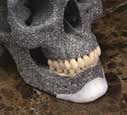
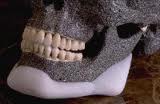
A: If I have to use off-the shelf implants, I generally stay away from Medpor because they are hard to put in, never fit very well to the bone, hard to stabilize to the bone and very hard to revise if that ever needs to be done. (of which the risk is about 25% of that need) I have used them a lot and the more I use them the less I like them. None of their purported benefits are true, other than soft tissue adheres to the implants making them a near nightmare to ever revise. But I will still use them when patients insist and some patients, like you, have an affinity for it.
When it comes to total jawline augmentation with Medpor, I would use a three-piece chin and jaw angle approach and not the Matrix system. The Matrix system is extremely hard to put in and virtually impossible to ever remove or revise due to the features of the material as previously described. Since the chin implant is put in as a two-piece implant with a male-female connector, it is easy to make a square implant but how far or close the two pieces are put together. It is, in essence, and adjustable width chin implant. When in doubt about jaw angle widths with the RZ style, it is always better to go with the biggest size as it can also be reduced during surgery. (but you can’t add to it)
Dr. Barry Eppley
Indianapolis, Indiana
Q: Dr. Eppley, I am interested in getting facial implants and am gathering information about getting plastic surgery. My intention is to improve my facial features with facial implants and cosmetic plastic surgery. I would like to get your professional impression and advice to enhance my look.
The areas that I would like to improve are:
– Jawline. I think I have an elongated face. So, I am looking for a more square and strong jaw.
– Cheeks and Eye Hollows. I am starting to notice some eye hollows. I think I do not have a strong features in this area, they are somehow “flat”. At this time, it is not bad, but I believe with time they will get more pronounced.
– Upper Eyelids. I notice that I have extra skin on my eyes lids, especially on my left eye.
– Any suggestions to make the face more aesthetically balanced and harmonious with the rest of the face.
Concerns:
– I am concerned about the scars and the surgery around the eyes. I do not mind internal scars but external incisions concern me.
– What is the material used for the facial implants? I read about Silicone, Medpor and Gore-Tex. I would like to know your impressions about these materials, and their pros and cons, and why you use ones over the others.
– Asymmetry, implant shifting and/or misplacement (due to position, scarring, etc.)
– Final look. I would like to look natural and not “done”.
– Revisions. What is your policy in case of revisions?
– Complications during and/or after surgery. What is your policy in case of complications during the surgery and/or after the surgery? nerve damage?, secondary effects?, responsibility, cost, etc.
– Bone erosion with implants over time. What is going to happen with the implants when I get older. I am 30 years old at this time. What is going to happen with the implants and the bones when I am 85-90 years old? the implant, the screw, the bone. Is there any research done about this?
Ideal:
– I can imagine you have heard this before, but I would like to get the “model” look. Strong, symmetrical, pleasing features. I attached some photos of some ideal looks, by all means I don’t want to look exactly like a specific “celebrity” or “model”, it is just an idea of the look I am looking for.
Questions:
– Could you provide me with your professional impressions about the surgery/ies that I will be benefiting from, their related costs and results?
– Do you provide any imaging about the possible results. I attached photos of my face in different angles.
– What are the difference between conventional and custom designed implants? what are their costs?
– How long will I have to stay in Indianapolis after the surgery?
– When would I be able to return to my normal life work, exercise, being in public, etc?
– How much discomfort should I be expecting in the surgery?
A: I have done some computer imaging on your face for the various facial implants for the following procedures:
1) Square chin augmentation
2) Vertical lengthening as a well as width expansion jaw angle implants
3) Cheek implants
4) Fat injections to the lower eye hollows/tear troughs
In answer to your questions:
CONCERNS
– there would be no external incision with fat injections
– implants would be silicone, best because of better shapes and easily reversible or modifieable
– all implants would be screwed into place
– natural comes from not using too big of implants, particularly when multiple implants are being used.
– we have a complete page of the revision policy which you would get to read before surgery.
– bone erosion is a non-issue. The implants will look the same decades from now as they will one year after surgery.
IDEAL
– you are correct in assuming that every male who wants this kind of surgery wants the ‘male model’ look. Those who have a chance to come close to that look have to have thinner faces and some decent underlying facial bone structure…you are the uncommon one that actually fulfills these criteria.
QUESTIONS
– I have attached some imaging predictions for your review. I will have my assistant pass along the costs to you in a day or two.
– you should be fine with standard implants. Custom implants are always ideal but at the additional costs of $7500 they had better provide a real difference…which in your case they do not.
– 2 to 3 days, all based on how you feel.
– that is based on how you feel and look, somewhere between 10 and 21 days after surgery.
– jaw angle implants provide the most discomfort, the other procedures are much less.
Dr. Barry Eppley
Indianapolis, Indiana
Q: Dr. Eppley, I recently had chin and jaw angle implants combined with fat transfer ten days ago. I see that my lower face is much wider than expected. I realize that a lot of this is swelling and that fat transfer is overdone with the expectation that much of it will be reabsorbed. However, if there is a “window” of time that would be possible to remove the jaw implants (the chin is just fine) then I would want to be aware of that.
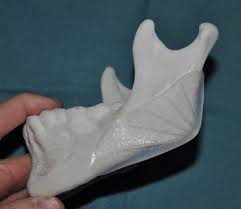
A: One of the very common early postoperative features of any jawline implants, including the chin, is the amount of swelling that occurs. Suffice it to say it is tremendous and doesn’t signify at all what the final outcome will be. It is actually very common that many patients in the first three weeks want to remove their implants as it just seems too big. While I am always happy to do whatever the patient wants, any judgment now is way premature and doesn’t indicate what the final results will be. As a general rule, the result of any facial implant follows the general guideline of 50% by 10 days, 75% by three weeks, 90% by six weeks and the real result (100%) by three months.
There is also the psychology of facial structural changes. Facial augmentation of natural structure is not like a facelift. In anti-aging procedures, people are psychologically comfortable with the swelling because they are just trying to go back to a place they know. (what they used to look like) Facial structural surgery is more psychologically unsettling because the person is going to a place of which they are not familiar. (a new look) This is tremendously unnerving and there is a natural tendency to want to return from when they came. If most patients can just get past this transition period (which is usually about 3 weeks, when a lot of swelling goes down) then they are usually fine and happy with their new look.
It is important to remember that the jaw angle implants are only 3mms thick, just a sliver of width really. So don’t let this temporary facial look with the swelling remotely think that the final result will look anything like what you see now. When you combine the swelling from the jaw angles with the fat grafting, it ail, temporarily look especially heavy on the lower third of the face.
Dr. Barry Eppley
Indianapolis, Indiana
Q: Dr. Eppley, I am looking for extreme jaw angle augmentation. I recently came across a paper that described a technique for mandibular angle augmentation, where segmental distraction osteogenesis and rib cartilage transplants were used to achieve the desired effect. What I found notable was that the degree of vertical augmentation and the extent to which the jaw became “square” was extreme, beyond what I have traditionally seen achieved with implants. For reference, I have included the before/after pictures from the paper below.
My questions are:
1. Do you (or would you) ever perform distraction osteogenesis to vertically lengthen the jaw, without affecting the bite?
2. Assuming you do not perform this type of surgery, would custom implants be able to achieve the same effect to the same degree?

A: That is an extreme approach to jaw angle implant augmentation for which there is a much simpler technique to get to the same place, custom jaw angle implants. I have done numerous jaw angle implants that drop the angles down as much a 25 to 30mms. I see no reason to ever do a distraction technique to achieve that kind of jaw angle result. What that paper is not showing you is the long-term result of that technique of which I will wager that much of the jaw angle lengthening either relapses or resorbs….not to mention the notching that undoubtable develops between the anterior edge of the distracted bone segment to the normal mandible in front of it. The x-ray shown does not show bony consolidation across the distraction site…probably because it does not occur in an adult. Such a result demonstrates that it can be technically done but that does not always mean it is a good thing to do.
Dr. Barry Eppley
Indianapolis, Indiana
Q: Dr. Eppley, I have a few questions regarding the chin and jaw angle implant procedure. I know you are very busy as a surgeon but if you had a few minutes of free time, I would appreciate it if you could answer some questions before our consultation. It would probably save time for both of us as well. Regarding the Mandible Jaw Implants, I’ve been researching online that this procedure is riskier than chin implants and that they tend to have a higher rejection rate. I’ve also read that they require a very skilled surgeon who has a lot of experience with this procedure. I’m sure you can understand my concerns, so here are my questions:
1) How many mandible/jaw implants (NOT just chin implants) have you done in the past?
2) How often does infection occur with jaw implants and how often do patients request to have them removed (either from infection or dissatisfaction)?
3) I’m looking for that “Chiseled Look”, or angular looking jawline which you see on many famous actors or male models – not necessarily a massive or fat looking jaw – but a defined/contoured jawline. Assuming one has a low body fat percentage, is this look possible with a jaw and chin implant? Also, will the jaw/chin implants look natural in that they look contoured to the face rather than just a large mass hanging from your lower face?
4) How long does recovery take for both a Chin and Mandible Jaw Implant procedure? I’m starting a new job soon so I’m probably going to give myself 2 weeks in between leaving from my current position and the start date for the new job. Would 2 weeks be enough time? It wouldn’t make the best first impression to walk into my new job on the first day and have a swollen jaw, haha.
5) Are the Mandible Jaw Implants customized for different size faces or are they “One-Size-Fits-All” ? I noticed some doctors use customized ones and some use standard implants. Is there a major difference in looks between the two types?
6) Finally, I noticed there are not a lot of Before and After pictures of jaw implants on the internet. Is this because the results don’t turn out good or it because its just not a common procedure? Would it be possible to see some of your jaw implant work during our consultation?
A: In answer to your questions:
- I have performed over 100 standard or custom jaw angle and jawline implants. (and many more chin implants) You are correct in that it is a harder facial implant procedure to do and is not a mainstream facial implant procedure done by a large number of surgeons.
- The infection risk with jaw angle implants is not higher than any other facial implant although the material of which they are made can affect that risk. (Medpor has higehr risk than silicone) Expect a 10% to 15% risk of revision which is usually for asymmetry or unhappiness with the size. (too big or too small)
- The only male patients that can achieve a ‘chiseled’ look or a male model look are those men that have a lean face where changes in the skeletal contours are most easily seen. With today’s implant shapes and designs there is no such result as the implant looking like it is ‘hanging from the bone’.
- Two weeks is really not enough time to recover from a facial appearance standpoint. Three weeks is more realistic.
- Both standard off-the-shelf implants as well as the option to customize them are available. Which approach a patient takes depends on their aesthetic needs and their budget.
- Since few plastic surgeons do this kind of facial work, it is hard to find many examples of results. My work is fully reviewable on my website at http://eppleyplasticsurgery.com//jaw/ under the patient photo section.
Dr. Barry Eppley
Indianapolis, Indiana
Q: Dr. Eppley, Can I benefit from cheek implants? I have a long thin face that has always bothered me. I don’t know what if anything can be done to add fullness or reduce length? I always look like I am scowling and as I age…it gets worse. The first picture attached us awful I know but it at least gives you an idea of my situation. The second pic is simply one I have played with to widen my features and wish were possible. Thanks for your time.
A: There are improvements that can be made to a long thin face in terms of both length and width. Facial height reduction options are more limited than those of width and are often relegated to the considerations of vertical chin reduction, upper lip lift (shortening) and in some cases rhinoplasty. Numerous facial width increase options include jawline and jaw angle widening, cheek implants and fat injections between these two skeletal area. (the trampoline facial zone) Which one(s) of these might be most beneficial to your face depends on a computer imaging analysis. Unfortunately your one picture is not adequate to much of anything with due to the poor picture quality. If you could send me a front, quarter and profile views of your face (non-smiling) I would be happy to do that assessment for you. Based on this one picture it does seem that cheek implants may be helpful for more facial width and that could be combined with fat injections for a more blended transition from the implants into the thinner and non-bony supported areas outside of the cheek zone.
Dr. Barry Eppley
Indianapolis, Indiana