Your Questions
Your Questions
Q: Dr. Eppley, I am researching tummy tuck surgery and trying to see what can be done for me. I have attached pictures to help you see my severe abdominal overhang problem. I would like your professional opinion on which course of action would be best.
 A: It is important to realize that there are different kinds of tummy tuck surgeries depending on the nature of the abdominal problem. While traditionally divided into a mini and full tummy tuck, that historic classification by today’s methods is too simplistic. I divide tummy tuck surgery into six different types and levels which vary based on the amount of tissue removed, the location and extend of the incisions and whether liposuction plays an additive role in improving the result.
There is no question you would get tremendous benefit by an extended tummy tuck. (level 5) This is a tummy tuck where the removal of excess tissue wraps around the side of the waistline or encompasses about 300 degrees around the waistline. (it does not cross the midline in the back like a full circumferential body lift does) If you do not chase the excess skin around the waistline (a traditional or level 3/4 tummy tuck stops at the hip bones) you will be left with big dog ears of skin and protruding tissue over the hips. In addition, it is important in any tummy tuck particularly when there is an overhanging abdominal pannus (apron) that a simultaneous pubic lift be done. This is often overlooked because it is hidden underneath the pannus but will become unmasked when the pannus is removed. Thus the excisional pattern of the tummy tuck should incorporate the design of a simultaneous pubic lift in its pattern. I have attached some picture showing a before and after an extended tummy tuck with a pubic lift. Note that the resultant tummy tuck scars wraps almost completely around the waistline.
Dr. Barry Eppley
Indianapolis, Indiana
Q: Dr. Eppley, I am interested in gynecomastia reduction surgery. I’m a 36 year old who has had man boobs my whole life. I’ve tried dieting and exercising to try and get rid of them with no success. They’ve caused great embarrassment for me over the years. I won’t swim in public and am very unconfident when it comes to dating and any sort of relations with the opposite sex.
 A: Your feelings of embarrassment and some degree of social restriction is not rare and exactly replicate what many men with similar problems state about their gynecomastia problem. Once gynecomastia has formed, there is no diet or exercise regimen that is going to get rid of it. While in extreme weight loss cases, breast tissue can be lost in a male, many men with gynecomastia do not need extreme amounts of weight loss. Gynecomastia reduction surgery can be very effective and is usually most effective when open excision is combined with liposuction. This is an outpatient procedure done under general anesthesia that takes about two hours to perform.
The success of gynecomastia reduction surgery is based on how completely the removal of breast tissue is done. There is always the risk of removing too much breast tissue causing a crater deformity or not taking enough leaving a residual areolar protrusion after all the swelling has gone down. This is the delicate balance plastic surgeons walk when performing this type of male chest surgery. For these reasons, there is about a 15% to 20% risk of desiring a revisional or touch-up surgery to optimize the chest contour.
Dr. Barry Eppley
Indianapolis, Indiana
Q: Dr. Eppley, I want to hear your expert opinion on whether a chin implant or a sliding genioplasty or some other thing is more appropriate for my jaw. I have attached pictures from 3 angles of my lower jaw, at a default, relaxed face. Notice my big jowls and rounded face. I have been told (by a few oral/maxillofacial surgeons) that a sliding genioplasty would probably be better than a chin implant because, as one surgeon put it,….an implant usually doesn’t create the angles I would need for the roundness to soften up a bit and for significant loose skin to pull. I don’t mind a slightly round face, I just don’t want to look like a balloon on the lower half of my face.
In your experience, how true is this???
A: A properly designed chin implant can create more angles than than a sliding genioplasty. A sliding genioplasty brings the chin forward but will make it more narrow in doing so. That is fine if that is the frontal change that you want….which usually works well for a female. Most males want a more square chin as it comes forward with a genioplasty which will not create that effect unless the bone is split and widened. But in doing so there will be a dip behind the chin in the jawline. Many bone-based facial surgeons often know how to do one chin approach (sliding genioplasty) but often do not have much experience with the array of chin implants, preformed and custom, that are currently available. Both implants and a sliding genioplasty are effective chin augmentation operations but their effects can be dimensionally different. It becomes imperative to know what each of them can aesthetically do and then apply it to the aesthetic needs of the patient.
Dr. Barry Eppley
Indianapolis, Indiana
Q: Dr. Eppley, I have this grinding type noise when I open my jaw on my right side. I have had orthodontic treatment years ago and have a underdeveloped lower jaw. I consulted my orthodontist about the grinding noise possibly being linked to my underdeveloped lower mandible. He told me that my jaws are lined up correctly and I should do nothing about this grinding noise. At the beginning if my orthodontic treatment a lower mandibular advancement was recommended, however I decided at that time that I would just have orthodontic treatment without surgery. After orthodontic treatment I have a clearly recessive jaw with extra skin around my lower jaw area. As a craniofacial and maxillofacial surgeon I would highly consider your opinion in what my next step should be.
A: Many people have asymptomatic grinding noises which emanate from their temporomandibular joints. This is usually caused by the disc in the joint which may catch on opening as the mandibular condyle comes forward. Underdeveloped lower jaws with Class II malocclusions (orthodontically corrected or not) have a greater propensity for these disc noises. But as long as one is having no pain in the TMJs or any difficulty with opening, there is no treatment indicated. For the recessive jaw and loose skin around it, this can be aesthetically addressed by either a sliding genioplasty or a chin implant. Either approach has certain advantages and disadvantages that must be assessed based on each person’s anatomy and aesthetic desires. The first place to make this determination would require an assessment of pictures from the side and front views.
Dr. Barry Eppley
Indianapolis, Indiana
Q: Dr. Eppley, Please help me I have flat head from the back and it looks ridiculous and people are laughing at me . And I’ve been suffering for over 22 years. I want to ask do you you have plastic surgery for the back of my head and please tell me the solution. I have attached a picture for you to see how bad it is.
A: Thank you for sending your picture. I will admit, and I have seen many flat back of the heads, that you do have an impressive one. It is one of the flattest back of the heads that I have ever seen. There is no question there is improvement to be had with flat back of head surgery, it is just a question of how much and what effort do you want to put into it. There are two basic approaches, either a single stage or a two stage approach. In a single stage approach, a custom implant or PMMA bone cement is use to create a moderate improvement. In a two-stage approach, a first-stage tissue expander is placed to stretch out the soft tissues. Then a custom implant or bone cement is placed to get a more significant change. (at least double that of the one-stage) Either way, you definitely can get a positive improvement from the very flat back of the head that you have with these occipital augmentation.
Dr. Barry Eppley
Indianapolis, Indiana
Q: Dr. Eppley, I am interested in skull reshaping surgery. I think I have scaphocephaly but I’m not sure. My head shape looks like those of the kids in the picture when I was younger and had received surgery thank God. My head shape has gotten better significantly but it is still narrow and my forehead seems to be protruding outward. I thankfully have a full head of hair but am afraid of what will happen when I go bald. I just want to talk you more in depth and possibly send some pictures. As you can see from the pictures my head shape isn’t as bad but it is more of a cosmetic issue. My only concern is of complications that could ruin my appearance for the rest of my life or going bald from complications from the surgery. Hopefully you can get back to me asap I’m excited for your reply as I have found someone out there that can help!
A: Your picture does show the remnants of having originally had scaphocephaly or sagittal craniosynostosis. As you have mentioned the front to back distance of your skull is just a bit long with a slightly protruding forehead and a somewhat narrow skull width. I assume hidden within your hair is a scalp scar from the original infantile craniosynostosis surgery. The question now is whether any effort at improving your skull shape justifies the effort. I do think the forehead bulge can be reduced, certain skull areas smoothed out and some width added using your existing coronal scalp scar. This is not a skull reshaping procedure in my experience that is associated with any major complications, only minor aesthetic ones.
Dr. Barry Eppley
Indianapolis,Indiana
Q: Dr. Eppley, I have a few questions after my rib graft rhinoplasty surgery. I’ve noticed that the very top of my nose bridge has started to warp to the right. It’s at the very top and it’s kind of hard to notice in person, it’s more apparent to me and then in pictures. Also a bump/hump has developed on the upper nasal bridge. I just didn’t know what possible things could be done about this if this indeed is a problem. Also, I know I’m jumping to conclusions, but if there had to be a revision surgery, how long would I have to wait? I’ve done research on revisional rhinoplasties and some doctors suggest waiting 6 to 12 months. But I saw that this was more for patients who thought their nose tip was too bulbous or the nose was too big, so the doctors suggested to wait for the swelling to go down. Another doctor suggested that he’s performed surgery as soon as two months on patients who’s revisions would be easier to fix sooner rather than later. How long would I have to wait to do a revisional rhinoplasty?
A: The timing of revisional surgery for any procedure fundamentally comes down to knowing that one has a stable target. This translates into three issues to consider: all swelling has resolved, the tissues have shrunken down and adapted to the new underlying framework and one has had enough time to accommodate to the new look. When all of these factors are considered, the timing of revisional surgery will vary based on the exact rhinoplasty procedure that was done. In general, most plastic surgeons would say that six to 12 months is when any type of revisional rhinoplasty can be done. This is, of course, a general statement and each nose and the concerns must be considered separately.
The key concept is that you don’t want to chase a ‘moving target’ when it comes to revisional surgery. Patience can be difficult but critical with secondary surgery. You don’t want to play ‘wack a mole’ with revisional surgery by jumping in too soon.
It is true that nasal dorsal issues are different then nasal tip issues because of the quicker resolution of swelling and tissue adaptation. Since your specific concern appears to be at the upper end of the rib graft in the radix, this type of revision might be considered sooner than other post rhinoplasty concerns. Some slight deviation and/or step-off of the upper end of the rib graft is not uncommon and can often be felt. How visibly significant that is will determine whether any revision is worth the effort.
The key concept is that you don’t want to chase a ‘moving target’ when it comes to revisional surgery. This is particularly true when one has had multiple procedures as one would like only undergo one revisional procedure. You don’t want to play ‘wack a mole’ with revisional surgery but jumping in too soon.
Dr. Barry Eppley
Indianapolis, Indiana
Q: Dr. Eppley, I’m not sure what is wrong with my face. My eyes seem misaligned and not symmetric. The thing is when I look in the mirror I can’t see much wrong with my face it’s only on photos. I’m not sure if the pictures make it 10x worse or if the mirror makes it look like nothing is wrong. I don’t really know the aspect in which people see me. I have a great deal of anxiety due to this and i’m not sure what’s wrong or how it needs to be corrected. What can you recommend ?
A: I think there is no question you have a significant orbital dystopia of the right eye. In the perfectly oriented facial photo, you can see that the right eye is lower than the left as well as the eyebrow on that side is also lower. This is somewhat masked in your other pictures because you tilt your head to the right side, probably as a subconscious reaction to mask the facial asymmetry as it makes it appear more symmetric than it really is. The difference in the horizontal pupillary levels is about 5mms lower on the right than the left. Also you can see that your nose is deviated to the right, one side of the chin is slightly longer on the affected side and the eyelid on that side has some laxity with a more ‘droopy’ position. If you had a 3D CT scan of your face you would see how different the right orbital ‘box’ is compared to the left.
All of the most significant signs of orbital facial asymmetry could be improved by a collect of procedures done around the eye. These would include orbital floor augmentation, right lateral canthoplasty and a right eyebrow lift would be helpful for improved facial symmetry.
Dr. Barry Eppley
Indianapolis, Indiana
Q: Dr. Eppley, I looked through your blog but didn’t see this question so I thought I would ask you here. I know jaw augmentation has a high rate of swelling, so I wanted to ask; do you recommend someone wear a facial compression garment for say the first 4 or so days to help with this or would this not help/ be a hindrance to the healing process? Also, would taking something like Arnica montana and Bromelain be of any use in swelling/ bruising( from what I’ve read on some surgeons websites ). Thank you for your time.
A: Thank you for you inquiry about the management of swelling after any jaw augmentation/jawline implant enhancement procedure. While there may be no detailed information in my blog to date in this topic, there will be now.
Jaw augmentation can potentially cause some of the most proportionate swelling on the face after surgery. This is because it requires lifting up much of the outer portion of the masseter muscle to place the implants. Because the masseter muscle is the second largest muscle on the face (the temporalis is the largest and is more on the side of the head than on the face), any disruption of its attachments can cause some profound swelling. The amount of that swelling is partially affected by the extent of the muscle elevation and how the tissues are handled. But there is no getting around the fact that there will be some substantative muscle edema and swelling.
Knowing this in advance, steroids are given intravenously during surgery as a pharmaceutical management strategy. This is probably the most effective strategy for reducing the amount of swelling that would otherwise appear. A compressive wrap is placed after surgery for the first 18 to 24 hours and is taken down the next day. This, like steriods, is about steroid control not resolution. Any wearing of the compressive wrap beyond that time period is more for comfort and has not been proven to help swelling go down any faster. Arnica and Bromelain are homeopathic agents that are commonly touted and used after plastic surgery procedures as anti-bruising and anti-inflammatory modalities. While they are certainly harmless and inexpensive, no scientific controlled study has ever been done that provides conclusive proof of their benefit. But their lack of any side effects makes their use of, at least, some psychotherapeutic benefit.
Beyond what is done during and immediately surgery, time and healing is the only really effective agent that ultimately eliminates swelling after jaw augmentation.
Dr. Barry Eppley
Indianapolis, Indiana
Q: Dr. Eppley, How successful are skull reduction procedures? How many have you done and what have you learned by doing them?
 A: Skull reduction refers to different reductive procedures of the cranium. These can be smaller isolated problems like lumps, bumps and the occipital knob, which are usually like osteoma growths. It can also included reduction of prominent sagittal ridges and other high spots due to mild disturbances in sutural and fontanelle closure.Occasionally overall skull reduction can be done but there are limits based on bone thickness as to how substantative that type of skull changye can be. Having performed over fifty specific skull reductions of various types, I would say that they have all been successful. This is not to say that there have not been some revisions of these skull reductions to make further improvements such as smoothness and more aggressive reduction effort. But the key in skull reduction surgery is patient selection and knowing what the limits of the procedures are. You can not just reduce any portion of the skull any amount one wants. Reductions can usually only be done as far down as through the outer cortical layer just into the diploic space.
Dr. Barry Eppley
Indianapolis, Indiana
Q: Dr. Eppley, I am quite old (66 years old) andI want to know if there is help for severe under eye bags and puffiness?
 A: At 66 years old you are far from being too old to have surgery to improve your lower eyes. Such surgeries are safely done on patients up into their 90s. The cause of under eye bags and puffiness is largely herniated orbital fat. As we age the ligaments that hold the fat around the under eye weaken. The fat then gradually spills over the lower bony rim creating the bags that you see. Since such fat is very susceptible to water retention it can get very puffy particularly in the morning or after very salty foods.
Such lower eyelid bags are not treatable by any creams or other topical treatment methods. They can be dramatically improved by surgical reduction/repositioning of the herniated orbital fat to smooth out the lower eyelid. Usually a small amount of lower eyelid skin is removed as well. This is known as a transcutaneous lower blepharoplasty. While there will be some temporary bruising and swelling after surgery, the improvement can be dramatic once it is fully healed weeks later.
If you have any pictures off of your phone that you cane send me I can give a definite opinion as to the benefits of this type of eyelid surgery for you.
Dr. Barry Eppley
Indianapolis, Indiana
Q: Dr. Eppley, How long does a fat butt lift take? Am I a good candidate for it based on my pictures?
A: The Brazilian Butt Lift is a procedure that does take from where you don’t want it and puts it into your buttocks. However, the caveats to the procedure are that only so much fat can be transferred, based on what you have to give, and thus the final results will be affected by that volume. Secondly, since much of the donor site will come from your abdomen and flanks, this will create a create a greater overhang of stomach skin that is probably best to deal with at the same time. While a tummy tuck could be delayed until later, it is more ideal to have it done at the same time as the Brazilian Butt Lift
Depending on what is done, the time of surgery will vary. For a Brazilian Butt Lift using only liposuction, the procedure is around 2 1/2 hours. If a tummy tuck is done at the same time this would extend the total operative time up to 4 hours
Given these issues, the best way to get the greatest understanding of the benefits and limits of the Brazilian Butt Lift procedure would be to come in for a consultation to discuss these issues in detail.
Dr. Barry Eppley
Indianapolis, Indiana
Q: Dr. Eppley, I wanted to know if there was any way to make my mouth smaller. I am 22 years old and I have always been self-conscious about my mouth. It has become a major problem in my life. I want to know what kind of recommendations you might have.
A: To some degree you have a bit of bimaxillary alveolar protrusion which makes your overall mouth area project further out from the frontal plane of your face. This makes your overall mouth look big. Also, by pure measurements, the horizontal width of your mouth from one corner to the other is wide as it exceeds a vertical line drawn down from the pupil of your eyes.
One method to make a mouth look smaller is to narrow its width by bringing in the corners of the mouth. While this can be down, it does leave scars at the corners of the mouth which with your natural skin pigment will probably not be very good scars. Eve if they were good and acceptable scars I do not think that would help that much as your problem is as much a protrusive issue as it is about its width.
An alternative strategy to dealing with a protrusive mouth is to increase projection of other areas of your face to better balance the mouth. You do have a retrusive chin and flat cheek bones. Increasing their projection through chin and cheek augmentation will probably help make the mouth look less protrusive and create better overall facial balance. This is a scarless and safer approach to smaller mouth surgery. The potential benefits of improving these facial areas on the appearance of the mouth could be demonstrated by computer imaging.
Dr. Barry Eppley
Indianapolis, Indiana
Q: Dr. Eppley, I am a 20 year-old female who is 5′ 4′ and weigh 119 pounds. I leave for college in two months but would like to get liposuction on my belly and thighs yet this summer. I’m not sure if I need something invasive like liposuction or maybe non-invasive like fat freezing. I know you haven’t seen me but would be interested in your thoughts.
A: It is hard to imagine that you have too much fat on you at 119lbs but that is always a relative perception. The most effective and efficient fat removal method is going to be liposuction because it offers an immediate effect and will remove the most fat. Non-surgical fat reductions methods, of which fat freezing (cryolipolysis) is one of them, always requires multiple treatments done over months that ultimately will remove much less fat than a more invasive method. That is the fundmental difference between invasive vs. non-inavse fat reduction…surgery equals quick results with a recovery while non-invasive offers less results over a prolonger period of time with no recovery.
Dr. Barry Eppley
Indianapolis, Indiana
Q: Dr. Eppley, Please send me information on the new Sientra breast implants. I am interested in information and having a breast augmentation done within the next twelve months. Thank you.
 A: The information that is available on breast implants is quite extensive and you have to be more specific as to what information you are seeking on Sientra breast implants. Sientra is the company name that was formed to distribute Silimed breast implants in the U.S. in 2012. Silimed is the world’s largest breast implant manufacturer out of Brazil where the implants are manufactured. Thus, Sientra breast implants are not really new, only new to the U.S.. Prior to their approval in 2012, the only two approved breast implant manufacturers were Allergan and Mentor.
Sientra uses a highly cohesive silicone gel in their implants, which is now done by the other two manufacturers as well. They offer both round and shaped textured gel implants in standard sizes from 175cc to 800cc volumes.
While all breast implant manufacturers tout the benefits of their silicone breast implants, what ultimately counts is their long-term rupture and capsular contracture rates. To date, the Sientra clinical study data shows the lowest rupture rates in the industry today. Thus they are my current breast implant of choice.
Dr. Barry Eppley
Indianapolis, Indiana
Q: Dr. Eppley, I have consulted with you in the past in regards to jaw/chin implants, and I just had a few questions for you in this regard.
I have read a lot of things about the difference between Medpor and silicone. The main concern I had was in reference to the issue of bone resorption. I know that there are many opinions out there, and I just wanted your experience and expertise as to what the pros and cons of each are.
I am especially worried about the issue of bone resorption, as I don’t want to cause myself a lot of pain and misery in 10 to 20 years. I read that silicone causes more bone resorption compared to Medpor. However, I also read that fixing the silicone implants with screws eliminates a lot of the pressure of the implants. Furthermore, I had read that bone resorption occurs at the chin. Would any occur with jaw implants as well? I would appreciate any clarity on this issue.
I also wanted to know which material feels more natural (if they do at all) when implanted.
A: The concern about bone resorption around any type of facial implant is overstated, largely clinically irrelevant and biologically misunderstood. It is not an active inflammatory response that is eating the bone away. Rather it is a passive bone remodeling response to the pressure of the implant on the underlying bone caused by the tight overlying soft tissues. It is simply put a biologic response to relieve the pressure of the tension band effect on the implant. This can result in a few millimeters or less of the implant settling into the bone which then stops once an equilibrium of pressure redistribution occurs. While largely reported in chin implants, probably because they are easy to evaluate by panorex and lateral cephalometric x-rays, this normal biologic phenomenon to an implant can occur anywhere in the body. Similar examples including breast tissue thinning with breast implants and gluteal muscle thinning in buttock implants.
You have to remember that putting a synthetic implant into the body is not natural and the tissues have grown and work based upon their natural tissue attachments and thicknesses. Once you introduce an implant into these tissues, the natural tissue volume and balance is altered and it will respond by adapting to it. A little bit of implant settling (tissue loss) is a very small price to pay for whatever aesthetic benefits that an implant may provide.
As for facial implants specifically, the chin seems to be the only location where this biologic response is seen. This is due to the natural tightness of the chin tissues and the thickness of the underlying chin bone. In most cases that I have seen, the chin implant is almost always placed or become displaced higher up on the chin bone over the thinner cortical bone.
I have seen this biologic phenomenon in both Medpor and silicone chin implants, which makes sense since both materials are non-resorbable polymers. It is just less reported with Medpor because the vast proponderence of chin implants done involve silicone materials both historically and currently.
I would not think that screw fixation would affect this biologic response either favorably or unfavorably.
Either Medpor or silicone facial implants can feel natural or unnatural based on their size, orientation on the bone, tissue location, thickness of the overlying tissues and the patient’s perception to them. Their physical characteristics (firm) are similar so their postoperative feel, all factors otherwise being the same, should be no different.
Dr. Barry Eppley
Indianapolis, Indiana
Q: Dr. Eppley, upon a consultation, the maxillofacial surgeon informed me that
I had facial asymmetry and that my right malar bone was posterior. I had always known there was a serious problem with my facial appearance which has caused me
much emotional distress throughout my life. However until this consultation,I couldn’t
articulate exactly what the problems were. More importantly, it hadn’t even entered my mind until this consultation that it might be possible that my facial asymmetry could be surgically corrected.
I have attached two photographs that I think illustrate very well the facial asymmetry. The main problems with the facial asymmetry are that the right malar is depressed and possibly the right eye and brow are slightly too low.
I would really welcome your professional opinion on possible treatment options for the facial asymmetry.
A: I can see quite clearly that your facial asymmetry is based on the right periorbital region and is largely skeletally based. The right orbital box (brow bone, lateral orbital wall and zygoma) are smaller/underdeveloped. This leads to the overlying soft tissues following the pattern of the bones, leading to a right brow and corner of eye/lower eyelid sag and a flatter cheek in that side.
In terms of improvement, you can consider for your facial asymmetry surgery a small right cheek implant. right lateral canthopexy, and right brow lift and possibly brow bone augmentation as well.
Dr. Barry Eppley
Indianapolis, Indiana
Q: Dr. Eppley, Can you do surgery or a procedure to remove this facial cyst, which is by my eye on the right side? It’s small now. It has previously gotten infected and the whole side of my face swelled up. I worry that it could get infected again.
A: Most facial cysts are known as dermoid cysts. They come from the skin and have a small pore associated with them if one looks close enough on the overlying skin. This is the pathway by which they get infected. Their internal shedding of their skin lining accounts for why they gradually enlarge.
Infections are common behaviors in facial cysts and speaks to the need for their removal. Once infected they become more adherent and harder to remove because of the scar that is created around them that becomes attached to the cyst capsule. The location of your facial cyst at the mid portion of the zygomatic arch is also in the path of the frontal branch of the facial nerve so greta care must be taken in its removal to prevent injury to the nerve that is responsible for moving your forehead an brows. For this reason, its removal in the operating room even under local anesthesia nye be advised.
Dr. Barry Eppley
Indianapolis, Indiana
Q: Dr. Eppley, can I get my nipples lifted higher on my chest? How much nipple lifting is possible? I have attached a picture of my chest so you can see how low my nipples are.
A: Nipples lifts can be done on a male chest but the amount of movement is much more limited than what can be done on a female breast. Men do not have the leeway of allowing or tolerating a vertical scar to raise a nipple very far on their chest that a woman does on a female breast. Thus the procedure for a nipple lift in a male is technically known as a superior crescent nipple lift. This is a simple procedure where a small crescent-shaped segment of skin is removed right above the nipple. This leaves a small fine line scar at the junction of the nipple and skin on the top edge of the nipple which usually heals very well without any significant scar. But the amount of movement upward is limited to usually 8 to 10mm (1/2 inch) at most in a single procedure. This means that even if done in two stages, the best you could hope for is 3/4 of an inch or slightly more.
Dr. Barry Eppley
Indianapolis, Indiana
Q: Dr. Eppley, I have orbital, cheek, jaw and nose asymmetry (see attached picture). Please advise as to what can be done surgically to resolve the facial asymmetry. I would be very appreciative of your answers and expertise.
A: What I see in your picture is a right-sided facial asymmetry which is smaller and deviated to that side. The most visible component of your facial asymmetry is a lower right brow and entire orbital box and eye as well as the cheek bone. Since it is not possible to lower the left brow and eye, facial asymmetry surgery would be focused on the right side. The right eyebrow could be lifted and the brow bone augmented. The right eye can be lifted by orbital floor augmentation and the corner of the eye moved upward. Lastly the right cheek bone could be augmented as well. There are other areas of facial asymmetry, such as the nose and jaw, but I would focus first on the most distracting aspect of the facial asymmetry around the right eye. This would be the most important focus of your facial asymmetry since it is what most people focus on during conversational interactions and in pictures.
Dr. Barry Eppley
Indianapolis, Indiana
Q: Dr. Eppley, I am interested in skull reshaping surgery. When I was a baby I had torticollis and i’m pretty sure this is what caused my plagiocephaly. My head looks like it was pushed in on the right side. I think the torticollis made me sleep on my right side a lot when I was a baby and thats why the right side of my head is more flat than the left. Here are some pictures of when I shaved my head. As you can see I would need an implant on the right side just above the ear and on the left side on top of my head to make my skull symmetrical. The back of my head is ok. Could you tell me if this is possible? Also maybe this could be done under local anesthesia with sedation? One last thing, I still have a head of hair and I’m a bit worried that an implant would put pressure on the hair follicles and blood flow resulting in hair loss. Is this a possible risk?
A: Certainly skull reshaping can be done for augmenting these two areas. The only question is which implant material to use. It could be done using either intraoperatively applied bone cement or custom computer-designed implants for each area. Given the asymmetric nature of the skull problem and the various shapes of implants needed, I would prefer to use custom designed implants as the most assured method of obtaining the best skull shape result.
Placing a skull implant is not something that can be comfortably done under local anesthesia/sedation and would not save you any money even if it could. Because a major cost of surgery relates to the time spent in the operating room, local/sedation cases take longer to do than when under general anesthesia. So any cost savings obtained by leaving out the anesthesiologist’s fee is wiped out by the longer time spent in the operating room
Lastly, raising scalp flaps and placing implants has no adverse effect on hair survival or growth.
Dr. Barry Eppley
Indianapolis, Indiana
Q: Dr. Eppley, I had injectable fat grafting done to my brow ridges several months ago. I like the results of my fat grafting but my only issue is that it leaves the area between the eyebrows (and above my nose) looking hollow. I’m not sure why my surgeon did not inject fat in that region. But could fat be injected there to provide a smooth transition between the brow ridges? I have circled the region between the eyes that is my concern from a stock photo for your reference. Are there any risks associated with fat grafting to the circled area?
A: The area to which you refer between the eyes is known as the glabellar area. It lies between the inside of the eyebrows and, in a male, is a more normally indented area than the brow ridges which overlie the eyes. If the brow ridges have been augmented and the glabellar area has not, then it may well look now by comparison that it is more indented than before. You would have to ask your surgeon why that area was not grafted alone with the brow ridges. I have not specific problem with grafting all the way across the brow ridges, from one side to the other, as long as it is done with a blunt-tipped injection cannula.
Dr. Barry Eppley
Indianapolis, Indiana
Q: Dr. Eppley, I had gastric bypass six years ago and lost over 100 lbs. My weight went down from 324 lbs to 205 lbs and has remained stable for the last three years. While I am not small by any means, I am comfortable with my body where it is now. I will never be less than a size 14 but that is okay. It is just that I need to get rid of this inner tube around my waistline as it is heavy and interferes with a lot of activities and the wearing of clothes. My question is what type of tummy tuck do I need? Would a body lift be better than a tummy tuck? I have attached some pictures that show my unholy inner tube.
A: Losing a lot of weight always create a frontal pannus and skin excess that extends around the waistline and into the back. The fundamental difference and question to consider between an extended tummy tuck and body lift is your concern about the buttock area and any sagging that it may have developed. A body lift involves a 360 degree excision of tissue around the waistline and its effect is essentially like ‘pulling up one’s pants’. Based on your pictures, I would say that I see little benefit to the addition of an excisional area completely around your back. When it comes to incisional length and location, the more relevant issue is whether your extended tummy tuck should include a vertical component in the front, known as the fleur-de-lis type tummy tuck. This adds the extra dimension of pulling in your sides more by a vertical tightening down the middle. This would produce for you more benefit in my opinion than anything done in your back/buttock area.
Dr. Barry Eppley
Indianapolis, Indiana
Q: Dr. Eppley, I am 28 year-old Asian make who is very interested in having cosmetic surgery performed for overall facial reshaping. As you offer a wide range of procedures which may be relevant to my goals, I hope to receive advice on the achievability of my goals.
First of all, I am very conscious in photos of the roundness and wideness of my face. (especially when smiling, at which point my cheeks appear very round and prominent) In addition, I would like to reduce the fullness of my lower face and make it thinner.
Secondly, I was wondering if a sliding genioplasty was advisable, as my chin appears to be relatively normal sized. I wish to make my jawline less round, and increase the vertical dimensions of my face to alleviate the aforementioned wideness.
Thirdly, I was wondering if procedures were available to create a more ‘deep-set’ look for my eyes. This, in addition to rhinoplasty to reduce the hump and raise the nose bridge, to reduce the ‘flatness’ of my face in profile.
I realize that not all of my expectations will be realistic nor all procedures advisable, so thanks for your time and expertise in advance.
A: A wide collection of procedures are available for facial reshaping as you are aware. In addressing all four areas of your facial concerns from top to bottom, I can make the following initial comments as they relate to your face.
1) I am now using performed or custom brow bone implants to build up the brow ridges. They can be placed through a limited incision endoscopic technique. That is the most effective way to create a more deep-set look to your eyes.
2) Your rhinoplasty would include a humor reduction, radix augmentation and some slight increased tip projection.
3) Cheekbone narrowing is the only way to provide some reduction in the mid-arch bizygomatic distance of probably 4 to 5mms per side.
4) I would consider paranasal augmentation, I have a new paranasal implant that I am really happy with that can not be felt and adds about 5mms projection to the nasal base.
5) I do think that a vertical lengthening genioplasty (which may have to be widened in a male) will help narrow the jawline. You do not need a horizontal advancement but when opening the vertical distance of the chin it does rotate it back a few millimeters so I would do a small advancement as well.
These are some initial thoughts. Computer imaging needs to be done to see how such facial reshaping procedures would look on you.
Dr. Barry Eppley
Indianapolis, Indiana
Q: Dr. Eppley, I would like a breast reduction. I would like that fat from my breast to be use for a buttock augmentation. I know this is a very large request but I hope it can be considered. I am a k cup. I’m only 5’3. The pain from my breast are unbearable. I’m only 17 years old. My breast have prevented me from so much and I have been turned down by so many doctors that I have lost count. My only wish is that I can have these procedures done before my senior year so I can finally experience my life as a normal teenager.
A: By your physical description and breast size, there is no question you would benefit physically and psuchologically with a breast reduction. However it is not possible or advised to take breast tissue and use it for buttock augmentation. Breast tissue is not pure fat but a mixture of fat and breast tissue. Within that breast tissue are tissue cells that may or may not in the future, become cancerous. Thus should not transfer any tissue for an elective aesthetic augmentation that has any potential for future malignancy. In addition, a breast reduction procedure does not remove tissue by a liposuction method but by an en bloc excisional method. This does not make it amenable to an injectable method even if it was appropriate fat tissue to use for buttock augmentation.
Dr. Barry Eppley
Indianapolis, Indiana
Q: Dr. Eppley, I was involved in a fight almost 7 weeks ago and suffered a comminuted zygomatic arch fracture. The result is that the arch is depressed about 4 to 5mms. I was unaware of the fracture and thought it was just some bruising as I did not suffer from any black eye or bleeding. By the time I realized and went to hospital I was told that as 3 weeks had passed the bones would have begun to heal and surgery is risky but they would have to break the healed arch and reset. I now have one side of the face little out of balance with the other side. Not sure what route I can take or you would recommended in place of a full arch reinstatement to its normal position.
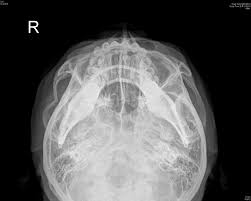 A: The zygomatic arch is a very thin sliver of bone that connects the cheek bone with the temporal bone in from of the ear. It is very much like an arched bridge spanning the distance between the two. Because it is thin and has a bowed outward shape, it can be broken right in the maximal point of convexity; These fractures can occur as an inverted V or it can be broken into several pieces. (comminuted) Repair of isolated zygomatic arch fractures is almost done by closed reduction, pushing the depressed bone segments outward trying to restore the convexity. While often successful, it is not uniformly so (particularly in communited fractures) because there is no structural support (like a plate and screws) added to the fracture reduction to stabilize it into its original arched shape. While there are open approaches that can achieve such rigid one fixation, this involves a coronal scalp approach from above which is a bit extreme given the small fracture that it is.
At three weeks after surgery, the bone is far from healed and can be easily manipulated. Again it is a thin bone and would actually take many months to heal and probably only do so by fibrous union in many cases. So this does make it possible to attempt a closed reduction if one so desired and would be no less successful now that it would have dbeen ays after the injury
But at this point, there are also other options to improve better facial symmetry over the depressed arch. Options include injectable fat grafting with or without closed reduction and to wait three months and insert a zygomatic arch implant of the thickness needed to restore facial symmetry.
Dr. Barry Eppley
Indianapolis, Indiana
Q: Dr. Eppley, Just about ten days ago I had forehead augmentation through a hairline incision. Everything appears to have gone well and I have suffered no complications of which I am aware. The swelling has gone down considerably but I doubt if it is all gone. The scar across the hairline is still pretty noticeable. How long does it take for the swelling to go away and when will the scar become less noticeable.
A: I am glad hear that everything so far has gone well after your forehead augmentation and it looks very acceptable at this early point after surgery. At three weeks after surgery, I would say about 85% to 90% of the swelling will be gone. Over the next two months the very final remnants of swelling will subside and the absolute final shape will be seen. In my experience it takes a full three months before one should judge the final result of any craniofacial reshaping procedure. As for the hairline scalp incision, It usually takes several months, and sometimes up to six months, to judge the final outcome of the frontal hairline scar. Usually the frontal hairline scar does really well even in patients of significant pigment.
Dr. Barry Eppley
Indianapolis, Indiana
Q: Dr. Eppley, I am interested in having my upper arms “done” by the best method. Another surgeon recommended Smart Lipo. I am researching the best method and am interested in a second opinion. I am 40 years old, not overweight and exercise daily.
A: When it comes to your arms, you represent a classic ‘tweaner’, which is someone who has a plastic surgery problem that can not ideally be treated by either of two different methods.
Your arm problem is not big enough with enough loose skin and fat to justify a formal armlift and its associated scar. No one really wants an armlift but it is the most effective arm reshaping procedure. (because it removes a lot of skin and fat)
Your arm problem is also too big, in my opinion, to have liposuction and GET THE RESULT THAT YOU REALLY WANT. It just isn’t effective enough to make a really big difference or have a dramatic reduction in arm size that any woman that I have ever seen with such arms really wants and hopes the liposuction procedure can achieve. But it is the only procedure that is justified (has no awful scars) and can make somewhat of a difference.
When it comes to liposuction, do not get caught up in all the hype about various liposuction technologies including Smartlipo. Despite widespread internet promulgation about its magical skin tightening properties, Smartlipo offers few if any advantages over any other liposuction method. (I can say this quite objectively since I have owned a Smartlipo device for years) Compared to the skin tightening you would need for your arms, no amount of fat melting and heating the tissues by a fiberoptic laser probe is going to make a big difference in the natural skin contraction that can occur with good skin elasticity. And unfortunately most upper arms that need to be made smaller do not have good skin quality over the back/triceps area.
In short, liposuction of your arms is the only reasonable treatment option. But the key to not being disappointed with the results from such a procedure is to have realistic expectations (modest not dramatic improvement) and choose a surgeon who has a lot of liposuction experience and not one based on a liposuction technology. At the end of the day, the most important predictor of success is the hands that is holding the device, not the device itself.
Dr. Barry Eppley
Indianapolis, Indiana
Q: Dr. Eppley, I am interested in very large breast implants. I had 2500cc then had a breast lift and now no implants. I would like to start my breast augmentation journey again. What is the largest that you will overfill? I know all the down falls of overfills but still want them.
A: If I understand your breast surgery history, where once you had overfilled saline implants to 2500cc per side, you now have no implants at all. I assume that you got to 2500cc through a staged series of fills using a base size of 800cc implants. (which are the largest base size saline implants made in the USA) To begin the journey, I would start with 800cc saline implants filled to 1200cc to 1400cc and then increase them 500cc at time every 3 months to get to the final volume. Given that the largest postoperative adjustable saline breast implants are 650cc (with a remote port under the skin which could be done as an office procedure for fill), non-remote port implants would have to be used which would require more of a minor surgical procedure for additional fills which could be done under local anesthesia.
Dr. Barry Eppley
Indianapolis, Indiana
Q: Dr. Eppley, I saw a post from last year in which you responded to a question regarding whether PRP/stem cells would be beneficial for Atrophic Rhinitis. I am wondering if you are interested in performing PRP on the turbinates. I have travelled to get PRP injections and have recieved some benefit but need further injections and would perfer to find a way closer to home. In my case, I have sufficient turbinate tissue but it has been damaged from cauterization so I am hoping to get further healing of the tissue.
A: Since you have received benefit from PRP injections to the turbinates previously, there would be no reason that you would not get further benefit by additional injection treatments of your atrophic rhinitis. The one caveat that I would add is that you consider the addition of a small amount fat with the PRP placed into the turbinates or go with fat injections alone. Fat has stem cells, (which PRP does not, and this should produce a more profound long-term rejuvenation of the turbinates than the short-stimulus that PRP provides. PRP can only stimulate the cells that are there while fat can create cellular rejuvenation and mucosal tissue regeneration, which ultimately is responsible for their function.
Dr. Barry Eppley
Indianapolis, Indiana