Your Questions
Your Questions
Q: Dr. Eppley, I wanted to know if during brow bone reduction will the top of my eye socket orbit be addressed as well to better define and make my eyes pop a little more? Could the protrusion of my forehead upper and mid section be burred down also as the bulging extends beyond the sinus region. Lastly could the chin bone be chiseled down horizontally using the inner incision approach and a slight bit of vertically?
A: During brow bone reduction surgery, it is possible to also reduce the horizontal projection of the brow bones. This is not a standard part of the operation but can be done at the same time. This does involve freeing up the supraorbital and supratrochlear nerves from the lower edge of the brow bone so that it may be reduced. That does create the increased risk of some permanent numbness of the forehead with the stretching or manipulation of these nerves. Simultaneous forehead bone reduction through a burring techniques can also be done with no increased risk.
While the chin bone can be reduced both vertically and horizontally through an intraoral approach, this is usually not a good idea as it will likely create chin ptosis due to the soft tissue excess. (the tissues do not shrink down so where does the excess go?) These types of chin reduction are best done from a submental approach as the excess soft tissues can then be managed (reduced) as well. (submental tuck)
Dr. Barry Eppley
Indianapolis, Indiana
Q: Dr. Eppley, I am going to undergo a variety of plastic surgery procedures on my face in the next few months but I have one big concern. I fear that everyone will know that I had surgery and I will have an obvious look that I have had plastic surgery. While I see the benefits of these procedures I certainly don’t want to broadcast to everyone that I actually had them. I know that seems a bit contradictory (wanting surgery but not to look like I have) but it is just how I feel.
A: The emotion you are describing is incredibly common amongst many patients undergoing a wide variety of surgical facial changes. Very few patients come in and say they want to look ‘done’ or do not care what their social circle of family and friends think. While how significant these facial changes will be is dependent on the exact type and number of procedures done, here is what I tell my patients about this very concern beyond the recovery period.
People know other people’s face in a gestalt or overall appearance, they usually do not recognize the specific details of what makes up a face unless it is a very outstanding feature like a large nose or very short or large jaw. Witness the classic example of a man who removes a long standing mustache and people know something is different but are not sure exactly what. Thus people do perceive a difference in a face, a more pleasing proportion to it, but would be hard pressed in most cases of surgical alteration to ever know what was done exactly…and may not even recognize that it was surgery. ‘You look more refreshed…have you been on vacation…have you lost weight’ are common reactions and thoughts to many after surgery facial changes.
In addition, the general public does not even know that many facial plastic surgery procedures even exist. (e.g., jaw angle implants or chin reduction). People can only recognize plastic surgery procedures that they know. Therefore in many cases of well done (not overdone) plastic surgery, the facial changes are not often appreciated although the overall facial enhancement effect is.
Dr. Barry Eppley
Indianapolis, Indiana
Q: Dr. Eppley, the sides of my head stick out and are very round. But if I pull my jaw down the sides go flatter as shown in the attached picture. Hopefully this could be corrected with some type of temporal manipulation? Also I have a pointy sagittal ridge which hopefully could be rounded off. As you can see in the attached picture if I pull my jaw down and put my hand on the sagittal ridge I feel my head has a more aesthetically pleasing shape. This in my mind is achieved by flatter sides and a rounded top of the head instead of a point. Lastly I had put a side profile as I’ve got a mild lump that sticks out which hopefully could be smoothed out . Could you tell me if these correction are possible?
A: Unfortunately your pictures are so cut off (cropped) that I can tell very little from them. But by description, temporal muscle reduction would be helpful as you can see that this is a muscular problem as evidenced by when the muscle is lengthened by jaw opening. Since it appears some of the pictures did not come through, I can not comment on the skull issues other than to say that their description sounds very typical for being capable to be corrected by bone reduction. (sagittal ridge reduction)
Dr. Barry Eppley
Indianapolis, Indiana
Q: Dr. Eppley, I would like to create a more deep-set look to my eyes. That is, the nose between the eyes is not visible in the profile view. I was thinking of having a custom forehead and brow ridge implant to bring them in front of the eyes, and a Le Fort II osteotomy to bring the nasal bone forward to create a result like so in the after:
Would this be possible? I mentioned the Le Fort II osteotomy since I would like to significantly bring forward the flat mid face, including the base of the nose, which is not done in a Le Fort I osteotomy or paranasal implants.
A: A custom forehead/brow bone implant can be done and would be the most successful approach to augmenting the upper third of the face. However, unless you have a malocclusion which requires a maxillary advancement, and even if you do, a LeFort II osteotomy is not really a great approach for midface augmentation. It is the most difficult of all Lefort osteotomies to perform (getting clean osteotomy lines) and the resultant augmentation above the LeFort I level does not usually justify the effort. (in other words, it is a long slide for a short gain) It would be far better and effective to create a custom midface implant for the entire nasmasomaxillary region even if one is having a LeFort I osteotomy. It is simpler and more effective than trying to move the bone at or below the infraorbital rim/nasal side wall areas.
Dr. Barry Eppley
Indianapolis, Indiana
Q: Dr. Eppley, I had done a facial scar revision on my jaw bone at mandibular line by w-plasty method because I have the problem in past my scar get created to hypertrophic scar after some month so i choose w-plasty option. Now it is 7 month completed kindly find the attach photo of my scar. Can I do some thing else to lighten the scar and match with my surrounding skin color. Currently I am using silicone Cica Care sheet at night and silicone gel in daytime with sunscreen of SPF 30. I want to reduce the redness of the scar. Please help me out.
A: Unfortunately while facial scar revision by w-plasty was a good treatment choice, you still have scar widening and a mild degree of scar hypertrophy. While it is possible that more healing time alone may help the scar redness, there is little that any type of topical scar therapy is going to improve over what you have now. Given your propensity for scar hypertrophy and your skin type, the only hope of any real improvement in the appearance of the scar is going to be through a repeat scar revision combined with 5FU injection therapy. Steroid injections with a scar revision in your skin type is too risky for skin pigmentation changes.
Dr. Barry Eppley
Indianapolis, Indiana
Q: Dr. Eppley, I had a skull reconstruction due to a golf ball size defect on the back of my head where the bones meet. I had a Medpor implant placed and it had gotten infected and then caused a skull osteomyelitis. I’ve been told that only fat grafting now is the only treatment option. What about antibiotic PMMA cement? Is there a risk of infection?
A: The most logical next step for skull reconstruction of an occipital skull defect after an infection with Medpor would be antibiotic-impregnated bone cement. Medpor has a notorious history of infection while PMMA bone cement does not. As long as the overlying scalp tissue is adequate thickness and normal vascularity (not been irradiated), PMMA bone cement should have a low risk of infection even with the history of a prior osteomyelitis. I don’t know if what you had constitutes a true osteomyelitis (bone infection) or whether this was more of an implant infection. (which is more likely) Either way PMMA bone cement has a long history of successful use in neurosurgery and orthopedic surgery in bone infections. The slow release of antibiotics from the impregnated cement continues for weeks after surgery.
Dr. Barry Eppley
Indianapolis, Indiana
Q: Dr. Eppley, I am interested in forehead augmentation but I am unsure what the ideal is so I want to ask you the expert. What in your opinion is the ideal forehead shape? I have two thoughts:
1) A strong straight vertical type forehead with no brow ridge, just straight up and down and no sloping,
Or
2) a straight forehead but with a visible supraorbital ridge which extends from side to side in a slight curve (long sunset stretched half oval shape) but still straight forehead?
What in your view is the best forehead shape for a man? Because I want to come get implant with you soon.
A: When it comes to the ideal male forehead shape it is largely a personal preference. In my extensive experience performing male forehead augmentation the most common desire is to have a slight slope to the forehead (almost straight) and a visible brow bone break. I would view the straight vertical nature of the male forehead as more important than the brow bone break. But either type of forehead shape can be designed into a custom implant if one chooses that type of forehead augmentation or applied with that shape if bone cements are intraoperatively applied.
Dr. Barry Eppley
Indianapolis, Indiana
Q: Dr. Eppley, I would like to get a tummy tuck, breast lift and aug, as well as some liposuction. I have a vacation in April that I would like to look like a million dollars for!! What is the best time to have this surgery?
A: Your description of plastic surgery to help reverse the effects of pregnancy is a classic one for the well known Mommy Makeover procedure. In reality this is a combination of procedures that focus on the breasts and abdomen/waistline area. Although technically it could be any body contouring procedure that helps to reverse the changes induced by pregnancy.
Given your April vacation target date (and this is later December) and the magnitude of recovery really needed for a full recovery from major body contouring surgery, such as a Mommy Makeover, you need a minimum of eight weeks between surgery and the day you leave for vacation. Ten to twelve weeks for Mommy Makeover recovery is even better. This way you will have complete freedom any residual issues that can linger after surgery during the second month thereafter and be only be thinking about what you are doing on vacation and not what you can’t or don’t feel like doing.
Dr. Barry Eppley
Indianapolis, Indiana
Q: Dr. Eppley, What type of procedure may work to reduce lower cheek fat. I have gotten filler in my cheeks, but it made no difference. I would prefer non surgical. I provided two photos for you to view, one at rest and one smiling. As you can see the smiling photo shows the problem I would like addressed.
A: In my experience the only effective method for reducing lower cheek fullness is microliposuction of the perioral mounds and down into the jowl area. I know of no non-surgical treatment that would have a thinning effect in this facial area. Nor am I surprised that filling up the cheeks would help this concern. It would not be improved by such a diversionary maneuver. Whether enough reduction can be obtained by the procedure can not be predicted beforehand, particularly in the thinner face where the fat layer is not excessive. But in my experience I have seen more successful perioral mound liposuction results than not even in thinner patients with no overly round faces.
Patients often confuse the location of the buccal fat pad which causes upper cheek fullness fullness with the perioral mound area that sits lower in the more superficial lower cheek area.
Dr. Barry Eppley
Indianapolis, Indiana
Q: Dr. Eppley, I have a crooked chin after genioplasty 6 weeks ago. After the swelling went down, the shape veers to the left. It looks lower than the right. My chin originally is very small and after this procedure it looks more sharp and just goes to the left. before surgery, i had slight asymmetry from an implant but the surgeon said he would improve it with genioplasty. What are my options?
A:At six weeks after a sliding genioplasty most of the swelling is usually gone. Residual swelling and bony remodeling will continue to evolve and, for these reasons, I always use the end point of three months to pout the final critical assessment of any facial bone procedure such as a sliding genioplasty. Whether what you are seeing now will be present in another six weeks cannot be predicted at this point. But for the sake of discussion let us assume that it does.
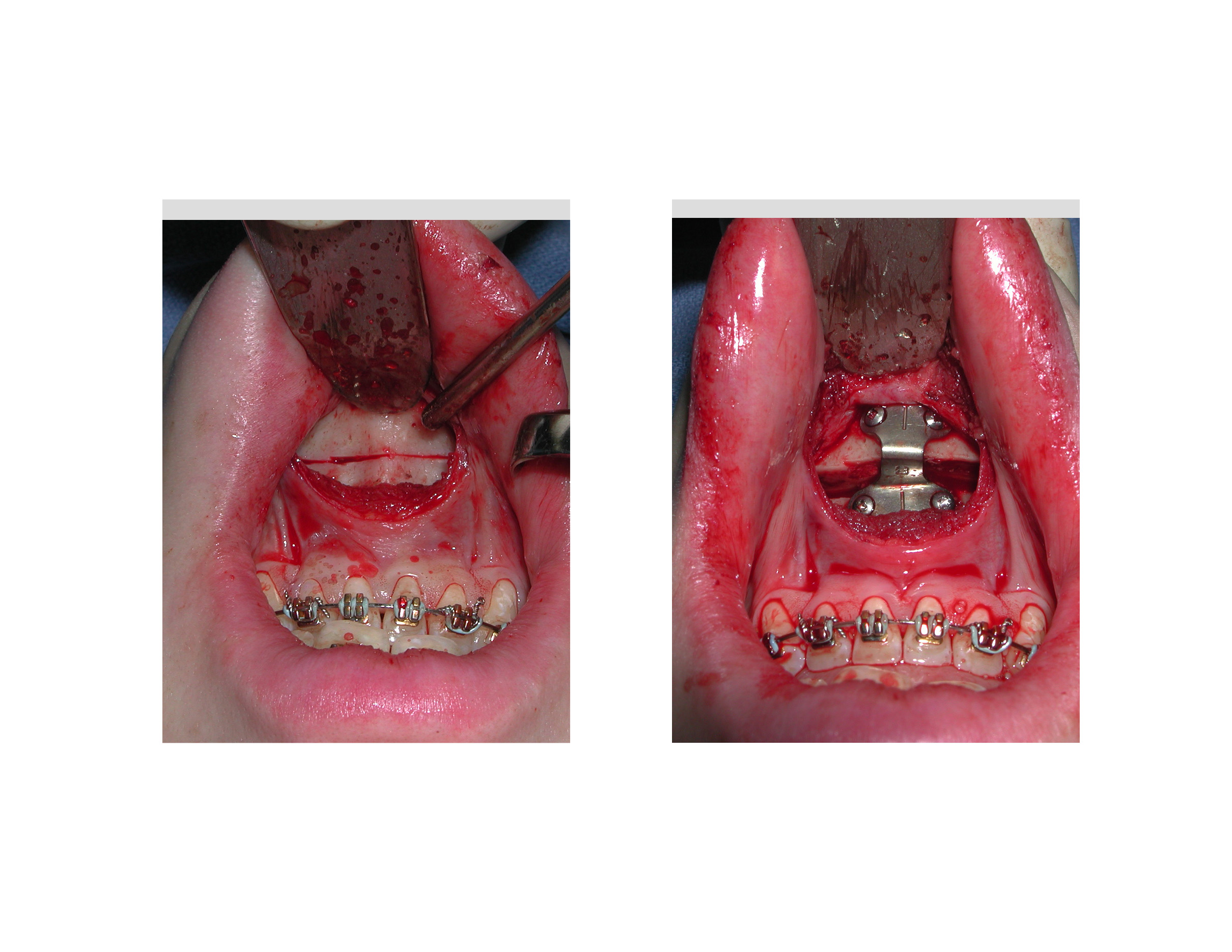 A crooked sliding genioplasty is the result of either an asymmetric bone cut or a bone segment that has rotated. Because most genioplasties have a central point of bone fixation (plate and screws), it is possible that the down fractured bone segment is rotated with the left side being slightly out more than the right. This is the most likely reason for what you are seeing now. There are two approaches to its improvement. One option is to adjust the bone fixation to reposition the chin bone segment. That is usually only possible in the first three months after surgery without having to recut the bone. The other option is to simply burr down the longer bone segment.
Dr. Barry Eppley
Indianapolis, Indiana
Q: Dr. Eppley, I have read on your website that it is sometimes possible to remove about 5mms or so of a skull protrusion. Is this sometimes possible with a protrusion on the back of the skull? I have attached some pictures that will hopefully be helpful. I don’t think of it as a knot but a protrusion as the angle isn’t that sharp and it is wider. I have a long, oblong shaped head, so the protrusion itself isn’t the only concern but total length. The rough price approximation on your practice’s website would not be too great of a burden so, depending on the safety risks, even a very modest decrease of the 5 or 6 MM mentioned on your website would, at least in this early stage, seem like something to me that would be worth the cost. Thank you.
A: Thank you for sending your pictures. They show well the broader occipital protrusion. That whole area can certainly be reduced by probably up to 6 to 7mms. That doesn’t sound like a lot but, because of its broader area, will make a bigger difference in appearance than that number alone suggests. The biggest issue is not whether the occipital reduction procedure will make a difference but whether the fine incision to do it will produce an acceptable scar. It has been my experience that these type of scalp incisions do heal really well but it is always an issue to consider in a man who shaves his head.
Dr. Barry Eppley
Indianapolis, Indiana
Q: Dr. Eppley, After my multiple body contouring procedures, just checking in to see if what I’m feeling right now is normal. I can’t seem to muster up any amount of energy and I’m feeling very lethargic and the overall discomfort is quite exhausting. Also the backs of my hands where the fat was injected appear to be still quite swollen and the pain seems to be the same as it was when I initially had the surgery done. Should I be limiting the use of my hands more so than what I have already been? I’m taking my meds as prescribed and I have no fever or signs of infection.
A: None of this surprises me after major body contouring surgery. (breast augmentation, tummy tuck, buttock lift, fat injections to hands) When you have a lot of surgery, it takes tremendous energy to heal and that is where your body is putting its efforts. Thus any normal activities suffer a result and are deprived of their normal energy needs. While it seems like an eternity, it is only less than one full week after surgery so this is really a short period of time in the context of the overall recovery. In short, I consider what you are describing as very common and expected. I do not believe you will start to feel like yourself again for a few more weeks.
It is very common for the hands to be just as swollen at one week after surgery as it is the first few days. There is the volume added by the fat and then the swelling sets in. Together it takes a few weeks to lose the mitten look and for the hands to get supple again. While hand elevation and limiting their use helps, there is also the practical side that you have to used them for many activities. In the long run (6 to 8 weeks) the issue will likely be the opposite. (I wish more of the fullness had stayed)
Dr. Barry Eppley
Indianapolis, Indiana
Q: Dr. Eppley, what can I do to make sure my breasts won’t be too far apart after getting breast implants? I know that breast augmentation doesn’t change where your natural breasts sit and that it only enlarges them. But I simply don’t want my new breasts to be too far apart. What can I tell my surgeon to make sure that my breasts are full and close together?
 A: You are both asking a reasonable question abut a common breast augmentation concern and also answering it at the same time. You have correctly surmised that all breast implants do is make your natural breasts fuller. That may or may not necessarily make them somewhat closer together depending upon the size of the implants. But there is no guarantee that they will and there is not anything your surgeon can do to change the natural wide spacing between your breasts. You will need to accept that this is a limitation of breast augmentation surgery and is a function of your anatomy and not your surgeon’s technique or ability. At the least, every plastic surgeon recognizes and understands this implant spacing concern…and usually goes to great lengths to point it out and that your after surgery result is still going to have a sternal gap between the augmented breasts.
Dr. Barry Eppley
Indianapolis, Indiana
Q: Dr. Eppley, I was wondering if it would be possible for you to perform a genioplasty subtle enough that my friends and family will not instantly wonder what happened to my face. I plan to not tell anyone about my surgery, so this is important. I really only want it moved forward a couple millimeters at most so that it comes closer to sticking out as far as my lips. I’m fine with the shape of my chin and the shape of my jaw. The effect will hopefully be more like “oh look he grew into his face” and less like “what happened to his face??” How much recovery do you think I will need until I look normal?
A:You can certainly only move a sliding genioplasty a few millimeters (3 to 5mms) of that is all one desires. And in looking at your profile picture, I would say that is all you really need anyway. While it appears you are set on moving the chin bone I might point out that cutting the bone for that amount of small horizontal change seems like a big effort. Such small sliding genioplasty movements are usually only done with it is part of an overall orthognathic surgery of the jaws where one is already in the operating room asleep and bones are already being cut. But when done as an isolated procedure a chin implant seems far simpler with a much quicker recovery.
For a sliding genioplasty I would give yourself 2 to 3weeks until you look fairly normal and have an unoperated appearance.
Dr. Barry Eppley
Indianapolis, Indiana
Q: Dr. Eppley, I’m very interested in deltoid implants. I have a very narrow biacromial width and an ectomorphic body type. Tendonitis in the wrists for years has lead me to be unable to engage in hypertrophy training with free weights so I’m looking for an alternative solution to help overcome the insecurity that comes from having narrow shoulders. How much width can be added onto the shoulders and how soon would I be able to have the surgery.
 A: When considering deltoid implants, it is important to know the exact location that the deltoid muscle needs to augmented. While the deltoid muscle forms the rounded contour of the shoulder, it really as three distinct sets of fibers or heads. The front head extends from the lateral third of the collar bone over the front part of the shoulder. The lateral head arises from the acromion process and covers the middle portion of the shoulder. The posterior head extends from the spine of the scapula and covers the back part of the shoulder/upper arm. While all three heads can be independently augmented, most patients are interested in the lateral head as this creates the greatest shoulder width. Incision location is best done at the back-shoulder junction and the implant placed in a subfascial location.
There are no truly preformed deltoid implants although they can be custom made based on the patient’s measurements. As an alternative, calf implants can be used as they are preformed and the medium size can add up to 1.5 cms in width per side and increase the muscle mass by over 100 grams of muscle volume.
Dr. Barry Eppley
Indianapolis, Indiana
Q: Dr. Eppley, I was wondering about something I have which are weird cholesteral spots on my eye lids. What do you have to do to get rid of those, I heard the only way was plastic surgery? What would you have to do?
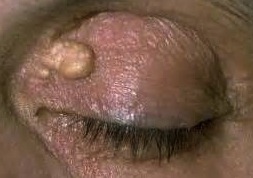 A: What you have are xanthelasmas which are well known fatty (lipid) deposits around and on the eyelids. They may indicate one has high cholesterol and is at risk of athlerosclerosis disease. Many treatments for xanthelasmas have been proposed from chemical peels to laser resurfacing. Usually they are best treated by excision through small incisions. This is particularly true when the xanthelasmas become bigger and more tumor-like. (known as a xanthoma) Each xanthelasma is a small flat hard white deposit of lipid material.While a small number of them can be treated under local anesthesia, large numbers may require more of an anesthetic to comfortably remove them.
Dr. Barry Eppley
Indianapolis, Indiana
Q: Dr. Eppley, my question is in relation to transgender plastic surgery of the face and body. How close can I come to looking like a real woman?
A: The concept of what constitutes a real women is open to wide interpretation. Since you are not a genetic female, you will never be a real women per se. But the question you are asking is whether any amount of surgical effort can make you look the ‘part’ and passable as a woman. This is a very practical question from both psychological and financial perspectives. You do not want to get caught in the ‘middle of the stream’ so to speak. Some may argue that if you can not get to the other side then why start the physical journey at all.
The best I can say is that those men who achieve that most successfully tend to be thin framed and thin skinned as these types of tissue can most easily reflect the surgical changes that are done underneath. This is true for both facial feminization surgery as well as body procedures like breast augmentation. Large facial features like a prominent jaw can be very difficult to size down to a more feminine look.
Dr. Barry Eppley
Indianapolis, Indiana
Q: Dr. Eppley, I had perioral mound liposuction and buccal lipectomies a fews days ago to thin out my face. I have some questions about the facial swelling that I now see.
1) I’ve read there can be persistent fluid accumulation that could need to be aspirated…how do I know if I have this problem or just normal swelling?
2) Would wearing a compression garment facilitate faster resolution of swelling?
3) I’ve read massaging the liposuctioned areas can help resolve swelling…would you advise this or is it a better idea to just leave it alone and let it heal on its own?
4) The perioral region is much more swollen, stiff and numb than my cheeks. Is this normal? When I touch the area it feels hard under my skin. What is this? Swelling? Scar tissue? If scar tissue, how long will it take to shrink down?
A: What you are experiencing after facial buccal lipectomies and perioral mound liposuction is normal early after the procedures. But to answer your specific questions:
1) There is no fluid accumulation that will develop under the skin in facial liposuction. That is a phenomenon that is unique to body liposuction where large volumes are fluid are initially instilled (tumescent infiltration) to facilitate the procedure. Facial liposuction does not use this technique.
2) A compression garment will not facilitate the resolution of the swelling nor is it really practical to wear.
3) Digital massage (aka lymphatic therapy) can be beneficial for swelling resolution since it stimulates the lymphatic channels to open up by the pumping effect on the vessels.
4) The perioral region is stiffer and even more swollen than the cheeks because it is in a lower dependent position (gravity) and even the cheek swelling drifts down to that area. That is why the perioral tissues are so stiff.
Dr. Barry Eppley
Indianapolis, Indiana
Q: Dr. Eppley, Is it possible to install cheekbone implants while wearing braces? And if so, is it recommended? To be more specific, it’s reasonable to think that, once the braces will be removed and the teeth aligned, my face would appear different from now. Would it be unwise then, to undergo a surgery while not taking into consideration the aesthetic changes brought by the braces?
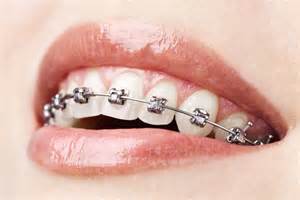 A: The question you are asking is whether braces distort the face so that it makes it more difficult to judge the effects of intraoperative sizing of cheek implants…or maybe whether cheek implants are even needed at all when the braces come off. The answer is no. Braces do create some lip distortion/protrusion but not above the dedntoalveolar facial level. They cause no facial changes at the cheek level. Only if the braces are in preparation for orthognathic (jaw) surgery with major jaw repositioning anticipated should the consideration of delaying cheek implants until afterward be considered.
From a technical aspect, braces do not impede or make the placement of cheek implants any more difficult than if they were not there. Cheek implants are placed through high maxillary vestibular mucosal incisions which are well away from the location of the orthodontic brackets and wires on the teeth.
Dr. Barry Eppley
Indianapolis, Indiana
Q: Dr. Eppley, How accurate is computer imaging for various facial surgeries? I have had several plastic surgeons do imaging for a future rhinoplasty and it is interesting that are significant differences between what they show. It is hard to know what is realistic. I thought computer imaging would show a very accurate result. So why are these plastic surgeons imaging results so different?
A: While computer can take a picture and change a facial feature like a nose, the only way the software knows what to do is based on who is controlling the mouse. In essence, computer imaging is a reflection of what the plastic surgeon THINKS he/she can achieve. They are showing the type of changes they want to illustrate to you presumably based on their experience…and hopefully it is a reflection of what is likely to occur in their hands.
Therefore it is important to understand that facial computer imaging is a prediction…and hopefully that prediction can be achieved by actual surgery.
What I try to show in computer imaging is the MINIMUM result that I think can be achieved as that should be the basis of what motivates one for surgery. More may be able to be achieved but that should be viewed as a ‘bonus’ and not the basis of one’s satisfaction with the result. This becomes critically important in an aesthetic operation like rhinoplasty which is highly scrutinized by the patient afterwards.
Dr. Barry Eppley
Indianapolis, Indiana
Q: Dr. Eppley, I wanted to restore my cheekbones and the saggy soft tissue with an endoscopic midface lift after cheekbone reduction. I found a very good maxillofacial surgeon and a plastic surgeon who worked together to bring my zygomatic bone to the old anatomic position and lifted the sagging soft tissue. That surgery was exactly six weeks ago. I know that swelling from jaw surgeries are extreme and lasts a long time but I am very afraid because I still can’t see the Ogee curve and high cheekbones that I had before the zygoma reduction. There is an improvement but not so much. I don’t know if it is because of the swelling that are all around my mouth, nasolabial folds and upper lip or if he didn’t lift enough or what could be the reason for that? I know I have to wait six months until one year to see the result but what can I do if my surgeon didn’t lift enough. ( I trust him but I know that my case was difficult because of the cheekbone restoration at the same time) Is it possible to lift the fat pad again after one or two years or is it too difficult? Otherwise I don’t know what to do, it still look a little bit saggy (maybe because of swelling)
A: With the scarred tissue from these two surgeries (cheek bone reduction and cheek bone elevation and fixation), it is highly unlikely you will get significant improvement with any type of attempts at midface or cheek lift. The tissues are both scarred and atrophic and their elevation will be both difficult and limited. While you need to let the swelling subside so you can judge the final result, I doubt it will be much different than before surgery. (remember the result is going to look worse as all swelling subsides.
Any effort at cheek sagging improvement in the future can only use the approach of adding volume to lift the sagging tissues…but that is exactly what you were looking to avoid from the beginning. (too much cheek fullness) I am afraid you have reached the point where the cheek result you have is as good as it is going to get unless you are willing to acccept other trade-offs.
Dr. Barry Eppley
Indianapolis, Indiana
Q: Dr. Eppley, I am 21 years old, 5 ‘0” and weigh105 pounds. Am I qualified for butt augmentation with fat. (Brazilian Butt Lift) If not what do I need to do to gain more weight or is there anything I can take to gain weight?
A: At your low weight, you are not a candidate for buttocks augmentation by fat injection. And there is no amount of weight that you could reasonably gain to get you to the point where there would be enough fat to make the procedure worthwhile. Even if you did gain a large amount of weight, the fate of the fat that is harvested and placed into the buttocks would be suspect with subsequent weight loss. Only buttock implants would be effective in someone who is so small with very low body fat.
Buttock implants are more reliable in terms of the volume that they provide (fat survives vary variably) but they have a higher rate of potential complications because they are an implant which is not naturally there. I would not say they are any less safe that fat, just that there is more potential complications and recovery than just using you own natural fat as the ‘implant’.
Dr. Barry Eppley
Indianapolis, Indiana
Q: Dr. Eppley, A few weeks ago I had a saline filled testicular implant. While the surgery went successfully, I am very unhappy because the size is about half the size of my opposite natural testicle. I saw on your website that you use a silicone implant that is more customizable, would it be an option that I could have the implant changed? Also I live in California, but would be willing to travel to you if it was practical, whats generally the amount of visits and time between consult and surgery with this type of procedure?
A: Provided your scrotal skin can stretch to accommodate a larger size, I see no reason that an immediate or delayed implant exchange can not be done. It would be important to know what the size of the opposite testicle is by measurements as perhaps the current problem is because no specific sizing method was done. But your original implant efforts are not lost as, at the least, it has served to stretch out the scrotal skin.
 While it is true that silicone testicle implants can be custom carved that is not usually necessary. With the largest silicone testicle implant being of the dimensions of 4.5 x 3.0 cms in size, that would be big enough for just about any man.
The surgery can simply be planned from afar. I would just need to know the current size (volume filled) of your current testicle implant. You could just come in for the surgery and any followup ‘visits’ would be done by Skype or email. For far away patients I have to be very practical about the patient’s travel issues. There is nothing one can not show me on a picture or Skype that would be unclear to me.
Dr. Barry Eppley
Indianapolis, Indiana
Q: Dr. Eppley, I had a rhinoplasty with rib graft. The surgery was to reduce the height in the bridge of the rib graft. Now the center vault of my nose feels soft, mushy. I think the surgeon removed my graft in the center bridge area. I am afraid, another surgeon said that if you remove the rib graft without replacing it, the nose can retract. Is this correct? How long do i have after the surgery to get a rib graft to replace what was taken out? Question, how soon after surgery can I have the rib graft replaced? I hope I phrased this correctly. Please help.
A: If I understand your situation correctly, you originally had an augmentative rhinoplasty with a rib graft. Then 11 days ago you had a revision to reduce the height of the rib graft in its upper portion over the bridge. Now there is a concern that the middle portion of the nose (or rib graft) is ‘missing’.(soft and mushy) It is unclear if the actual height of the graft in the bridge/radix area was adequately reduced or not. Since the tip also feels soft and high, I assume this revisional procedure was done through an open approach.
Your question is whether this missing portion of the rib graft should be replaced due to fear of irreversible skin contraction. I would not have similar concerns about the middle vault skin irreversibly contracting. While some skin contraction may occur, it can always be stretched out later to accommodate more graft material. If the tip in a rib graft rhinoplasty loses considerable underlying support, skin retraction there may be kore problematic. The real question is not skin retraction but whether you feel there has been adequate reduction in the bridge and/or too much reduction in the middle of the graft. While only being 11 days after surgery, swelling would usually make that hard to judge. But you are very familiar with after rhinoplasty swelling so you are in a better position to judge these early results than many. If one is convinced too much cartilage has been removed or additional adjustments needed, then that may be a valid reason for an additional revisional procedure.
Dr. Barry Eppley
Indianapolis, Indiana
Q: Dr. Eppley, I have a large outie belly button that appeared after a prior abdominal surgery about ten years ago. Having had two children afterwards the size of the outie is increasing. Besides the outie, my belly button is way too wide and looks like a ‘sombrero’ to think of the closest analogy that I can. I have attached a picture for your assessment as to how fix this saucer-sized outie belly button. I absolutely hate it!
A: Thank you for your inquiry and sending your picture. Your large outie is likely the result of an umbilical hernia from your original abdominal surgery. (noting the midline abdominal scar above and below the umbilicus) Your belly button repair (umbilicoplasty) would require a combination of correcting the hernia and simultaneously converting the outie into an innie umbilical shape. This can usually be done successfully, particularly when one has the ‘advantage’ of being able to use some of the abdominal scar above and below the belly button. But the key is to repair the hernia which is pushing out on the belly button thus creating its outie appearance. The outie skin can then be tacked back down to the abdominal fascia, recreating an innie funnel look.
Dr. Barry Eppley
Indianapolis, Indiana
Q: Dr. Eppley, I am looking into on behalf of my fiancé a tummy tuck. She has had two babies and has a bit of loose skin on her stomach that really gets to her. She wants it removed along with the stretch marks. We are just wondering roughly how much this would cost?
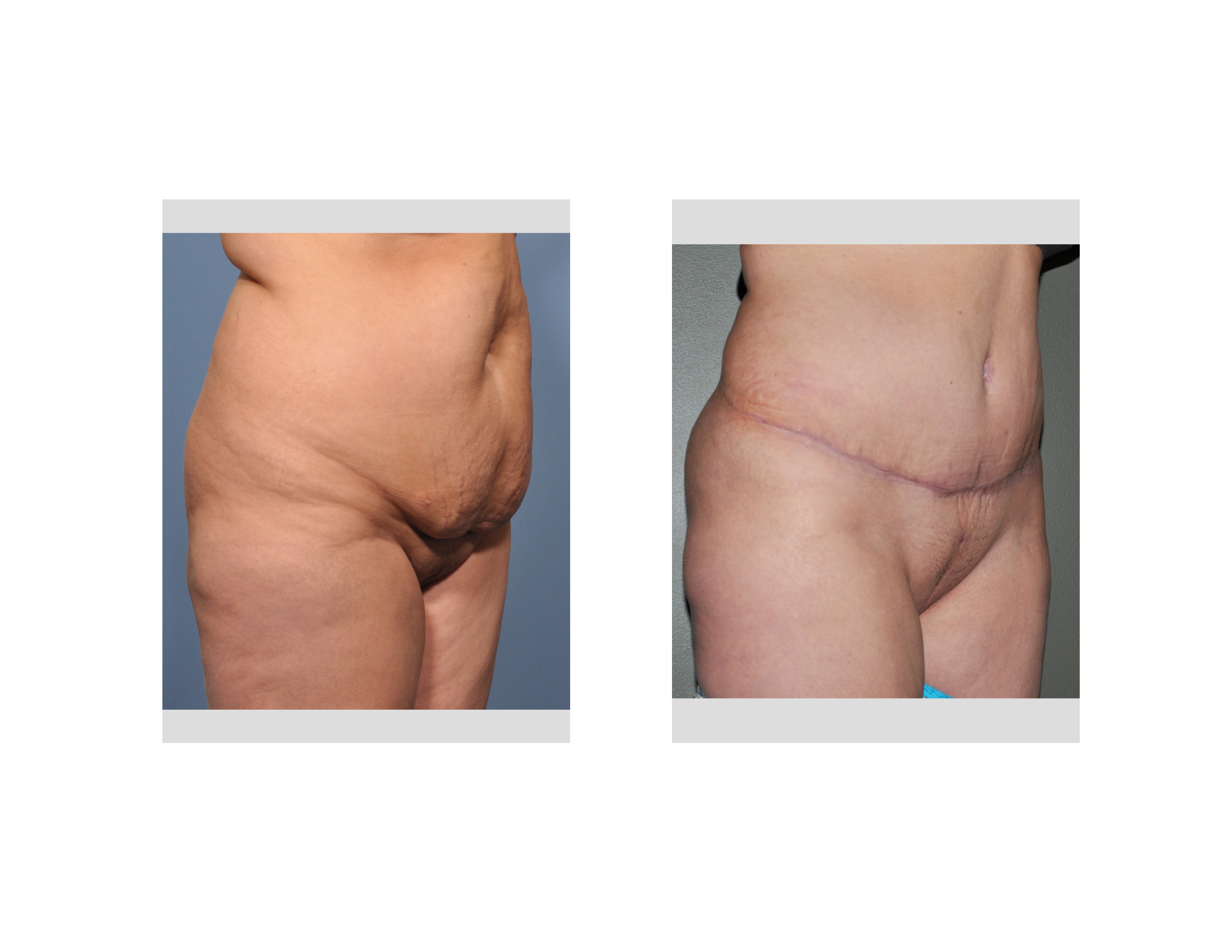 A: There are numerous types of tummy tucks based on the length of the incision, how large a segment of skin and fat is removed and whether it includes liposuction of areas beyond that of the excisional tissue removal. These different types of tummy tucks involve variable amounts of time to perform and this will affect the overall costs of the procedure. This creates a potential range of tummy tuck costs anywhere from $4500 to $8500. Obviously the bigger the type of tummy tuck needed the longer it takes to perform and the more it will cost.
Stretch marks will only be removed if they lie within the zone of tissue excision. Since the vast majority of stretch marks usually emanate in a radiating pattern from the umbilicus, those that lie above it and beyond it will remain. Full tummy tucks remove more stretch marks than limited or mini- type tummy tucks.
Dr. Barry Eppley
Indianapolis, Indiana
Q: Dr. Eppley, I am a 39 year old male who had a left-sided sphenoid wing meningioma removed two years ago. The temporalis muscle didn’t reattach properly and is bunched above the zygomatic arch. I was wondering if you had experience correcting this asymmetry. You mention patients not losing function with a reduction of the posterior temporalis. Have you had the same results with the anterior temporalis? I’m am going to get Botox injections into the muscle bulge in a few weeks. If this doesn’t work well what are my surgical options? Thank you very much for your time.
A: Your pictures show well a detached anterior edge of the temporalis muscle which has contracted and bunched up done at the zygomatic arch as you correctly surmised. Since it is not possible to free up the muscle and stretch it out and resuspend it, temporal muscle reduction of the bulge would be the only treatment approach. Unlike the posterior temporalis, the large anterior belly of the temporalis muscle does carry with it some greater functional significance since it is attached directly to the coronoid process of the mandible. I think the approach of Botox injections is worthy of an initial treatment approach. Sometimes that can work extremely well while in others other moderate muscle reduction is obtained. This muscle bulge can be reduced surgically and that may be reasonable with augmentation higher up in zone 2 of the muscle since that now has more hollowing than the other side due to the muscle retraction. But I would first see how effective Botox may be before considering that approach.
Dr. Barry Eppley
Indianapolis, Indiana
Q: Dr. Eppley, I called you last week regarding my upcoming skull surgery with Dr. Eppley. I was wondering if there are clearly defined size restrictions on the silicone implant. My head is small all the way around so I’d like to augment both the front sides and the back. However I’m not sure if this would be possible without tissue expansion. Presumably, the answer would depend on how much I wanted to augment each area, so I’m wondering if there are some kind of numerical limits on that.
I am primarily concerned with augmenting the frontal sides, so I need to figure out how much width I would need to sacrifice there in order to be able to do a little bit of an increase in the back as well. This is not something I would want to guess on or eyeball, so a little more clarification would be really helpful.
Additionally, I want to make sure that if for any reason I have problems with the implant, I can get it removed quickly and for a small/ reasonable fee. I’m sure I will love it, but I just want to know that it can be removed if I really hate it for any reason.
A: Your assumption that there are size limitations for skull implants based on how much the scalp can stretch is a correct assumption. Unfortunately there are no established methods or means to determine what that limit. It is exclusively based on my experience in doing skull implanty procedures. If the implant is being placed through an open coronal approach, the scalp does become fairly ‘stretchy’ and good numbers are about 7mm to 9mms all the around. That may not sound like much but in skull implants which cover a broad area that effect can be quite profound and more than one would think.
The beauty of silicone skull implants is that they are relatively easy to place and reverse if desired.
Dr. Barry Eppley
Indianapolis, Indiana
Q: Dr. Eppley, Four months ago I underwent a procedure of Facetite and Fractura to smooth out the lines in my forehead. My head was very sore to the touch in a particular spot for four months but not visible bump or bruise. It felt as if I had “walked into a wall”. Now I have a dent in my skull 2 cm wide by 3 cm long… I am concerned this is permanent.. and need to know how this can be fixed! I am guessing the thermal heat had something to do with this. I am concerned about my brain behind the bone also. I am looking for a second opinion in this matter. HELP!
A: Most likely the forehead contour changes that you have MAY be permanent. These are soft tissue changes in the forehead and not that of the underlying bone or brain. The heat from these treatments has likely caused fat atrophy in the forehead tissues causing the soft tissue indentation. While it is possible there may be some recovery of tissue thickness (with emphasis on the word ‘possible’) a complete return to a normal forehead contour over the indented area seems unlikely to me. The appropriate treatment at this point would be fat injections or, at the least, PRP injection treatments.
Dr. Barry Eppley
Indianapolis, Indiana
Q: Dr. Eppley, I am interested in jaw angle implants for the asymmetry between the fullness/width at my mandibular angles. I am lookingfor a Oral surgeon/plastic surgeon combo who has experience working in the mandibular area because a few years ago I had a BSSO and after the surgery this asymmetry became more apparent to me. I had synthetic fillers placed on the deficient side a few months ago and they worked well but I don’t know if this is something I am interested in doing for the rest of my life and possibly want a long-term fix. You seem experienced with this type of surgery and therefore I am reaching out.
A: Many times after a BSSO mandibular procedure there will be changes in the shape of the jaw angle area. This is due to either how the proximal and distal segments of the BSSO were put together, bone resorption or both. Jaw angle implants can reshape these areas nicely and the only question is whether they should be custom or off the shelf implants…that would depend on the magnitude of the deformity and how asymmetric the two sides are.
Dr. Barry Eppley
Indianapolis, Indiana